

Change Orders in San Diego Remodels: What They Are, When They’re Legit, and How to Avoid Surprise Costs
Ask any homeowner what they’re worried about in a remodel, and “surprise charges” will be in the top three. That’s where change orders come in. A change order isn’t automatically bad — it’s just the formal way to document work that’s different from what was originally agreed to. The key is knowing why they happen, which ones are normal, and which ones you can prevent.
This post breaks down how we look at change orders at Kaminskiy, specifically for San Diego projects where permits, older homes, and HOAs can add extra layers.
🎧 Prefer to listen instead? We covered this in a podcast-style episode — what’s legit, what’s preventable, and how we handle it at Kaminskiy.
Key Takeaways
- A change order is just a formal, written change to scope, price, or schedule — it’s not automatically “bad.”
- Most change orders happen for three reasons: the homeowner adds something, we find something hidden, or the city/HOA requires it.
- The earlier you make selections and share HOA rules, the fewer change orders you’ll have.
- Some change orders can’t be avoided in older San Diego homes, so having a 5–10% contingency is smart.
- A good remodeler will explain the change, price it, and get your approval before doing the work.
- Vague, surprise, or undocumented changes are red flags — clear and written ones are normal.
Before we get into definitions, here’s why this matters: most of the “surprise” stories you hear about remodeling are really just poorly explained change orders. When you know the 3 main reasons they happen — and which ones you can shut down with better prep — the whole process feels calmer. So let’s pull it apart and show you exactly what’s happening when a contractor says, “This will be a change order.”
What Is a Change Order?
A change order is a written agreement to modify the original scope, price, or timeline of your remodel.
Most change orders happen for one of these three reasons:
- You decided to add or upgrade something,
- We found something inside the walls we couldn’t see before,
- The city/HOA required something new.
Good change orders are clear, priced, and approved by you before we move forward. That way, everyone stays on the same page.

The 3 Most Common Reasons for Change Orders in San Diego
Even when a project is well-designed and documented, there are a few situations that trigger change orders over and over again — especially in older San Diego homes or neighborhoods with HOAs. Knowing these ahead of time helps you spot which ones are normal and which ones you can avoid.
1. Homeowner-Requested Changes
This is the most common — and the easiest to understand.
Examples:
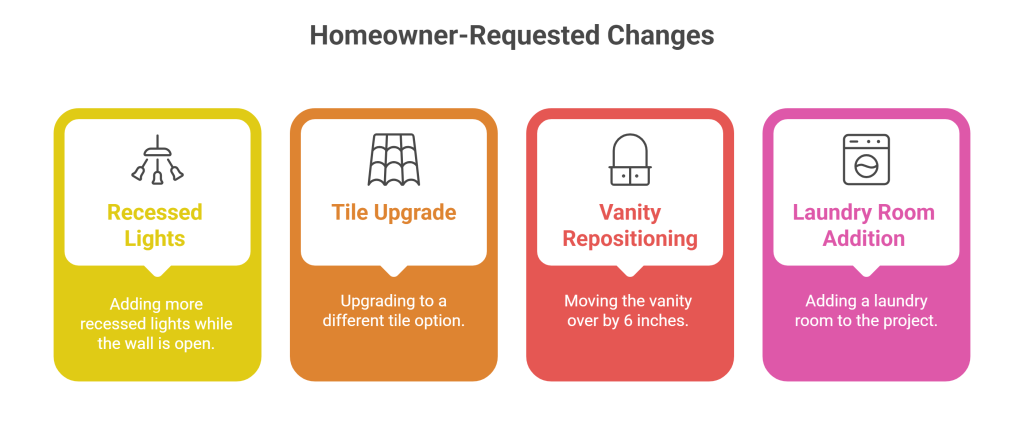
- “Since the wall is open, can we add more recessed lights?”
- “Let’s upgrade to the other tile.”
- “Let’s move the vanity over 6 more inches.”
- “Let’s go ahead and add the laundry room while we’re at it.”
Nothing wrong with this. It’s your house. But it changes labor/material, so it gets documented.
2. Hidden or Unforeseen Conditions
San Diego has plenty of older homes, add-ons from the 80s/90s, and creative DIY from previous owners. We can’t always see what’s behind the drywall until demo.
Examples:
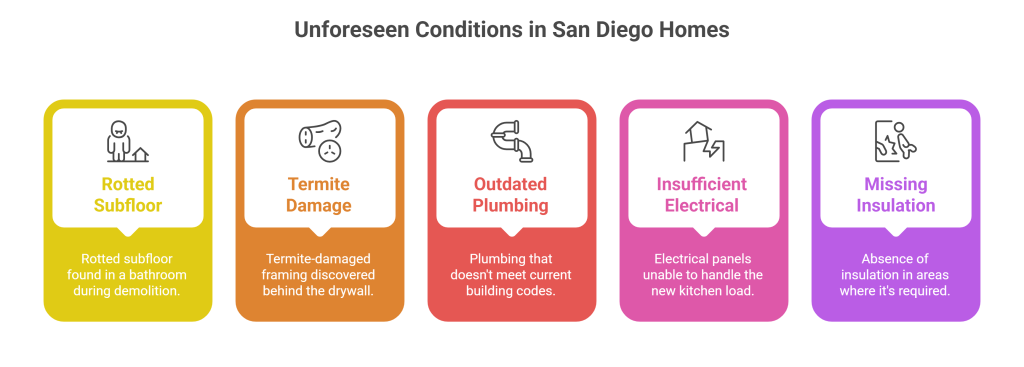
- Rotted subfloor in a bathroom
- Termite-damaged framing
- Plumbing that isn’t up to current code
- Electrical panels that can’t handle the new kitchen load
- No insulation where there should be
When we discover something that has to be corrected to build safely or pass inspection, we document it as a change order. This protects you and the project.
3. Jurisdiction / HOA / Code Requirements
Sometimes the city or your HOA asks for more than what was in the original plan.
Examples:
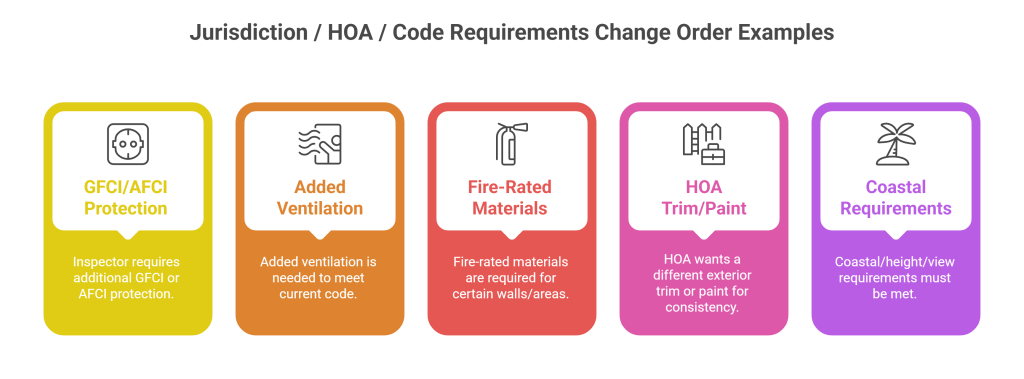
- The inspector requires additional GFCI or AFCI protection
- Added ventilation per the current code
- Fire-rated materials for certain walls/areas
- HOA wants a different exterior trim or paint for consistency
- Coastal/height/view requirements
We don’t control those requests, but we do need to comply — so we create a change order so you know what changed and why.
Which Change Orders You Can Prevent (and How)
The good news: some change orders can be avoided if we make decisions early. The goal isn’t zero change orders — it’s zero avoidable change orders.
- Make selections on time: Late tile, flooring, plumbing, or appliance changes can trigger labor changes (different layout, different cuts, different rough-in).
- Stick to the approved layout: Moving plumbing/electrical after rough-in = extra work.
- Be realistic about walls: If you’re “thinking” about opening a wall, decide it before demo. Structural changes midstream are pricier.
- Give us your HOA rules early: If we know their standards and paint schemes up front, we can design to them and avoid rework.
- Share everything you know about the house: Previous leaks, add-ons, areas that “feel soft”—this helps us spot trouble.
Change Orders Nobody Can Prevent
Even with great planning, some things will always fall in the “we found this and we must fix it” category:
- Water damage that wasn’t visible
- Out-of-code electrical discovered during demo
- Undersized beams or missing headers in older SD additions
- Sewer or drain line issues once the floors are opened
- City inspection comments, we couldn’t predict
When it affects safety, structure, or code compliance, we have to address it and document it. That’s what the change order is for.
How Kaminskiy Handles Change Orders
Here’s the simple version of how a good design-build firm should do it:
- We tell you right away what we found or what you’re asking to change.
- We price it and describe it in writing (scope, cost, and any time impact).
- You approve it — no silent add-ons.
- We proceed and keep the project moving.
That way, there are no mystery charges at the end of the job.

Building a Contingency Is Smart (Especially in Older San Diego Homes)
We always recommend homeowners keep a small contingency on the side — often 5–10% of the project cost, sometimes a bit more for older homes or big structural work. Not because we “plan” to use it, but because older San Diego homes can surprise you.
Having that cushion makes it way less stressful if we do have to fix something inside the walls.
Signs of a Healthy Change Order vs. a Red Flag
A change order by itself isn’t a bad thing — it’s just the project “catching up” to reality. What matters is how clearly it’s explained and how it’s approved. Use the list below to distinguish a healthy, transparent change order from one that might cause problems later.
Healthy:
- You know what changed
- You know why it changed
- You see the cost before the work
- It’s tied to code, safety, or your own request
Red flag:
- Vague description (“extra work”)
- No written approval
- Big number with no explanation
- Lots of changes that could’ve been caught in design
If you get something that looks like this, ask for it in writing before the work starts — a good remodeler will have no problem spelling it out.
Frequently Asked Questions
Are change orders normal in a home remodel?
Yes. Even with great planning, most remodels — especially in older San Diego homes — have at least one change order. The goal isn’t to eliminate them completely, but to make sure they’re clear, necessary, and approved by you.
Can I refuse a change order?
You can decline a change order if it’s for an optional upgrade or an added scope you requested. But if the change order is for safety, code compliance, or an inspector/HOA requirement, it usually has to be done for the project to pass and move forward.
Why do change orders affect the schedule too?
Because most changes affect labor, materials, or inspections, if we add lights, move plumbing, or reframe a wall, we may need to reschedule trades or call the inspector back — that can add days to the timeline.
How can I keep change orders to a minimum?
Make selections on time, stick to the approved layout, give us the HOA rules early, and tell us if you’re even considering extra work (like built-ins or more lighting) before we open walls. Early decisions = fewer surprises.
What’s the difference between a change order and going over budget?
Going over budget can happen quietly if you upgrade finishes as you go. A change order is formal — it documents that the scope, price, or schedule has changed. It’s actually a protection for you because it keeps everything transparent.
Do you recommend setting aside extra money for change orders?
Yes. We typically suggest a 5–10% contingency, sometimes more for older homes or big structural projects in San Diego. If you don’t need it, great — but if we find something unexpected, you won’t be stressed.
Ready to remodel without surprise change orders? Call 858-271-1005 or schedule a free in-home design consultation, and we’ll walk through your scope, approvals, and selections up front.

Kimberly Villa is the Operations Manager at Kaminskiy Design and Remodeling, with nearly two decades in the remodeling industry across both East Coast and Southern California markets. That day-to-day experience, from the first budget conversation to the final walkthrough, shapes the articles she writes for the Kaminskiy blog, helping homeowners make informed decisions before, during, and after a remodel. Before publication, each article is reviewed for accuracy by a Kaminskiy team member with relevant expertise, such as a licensed architect, certified designer, or project manager.