Balancing Trends and Timelessness: How to Choose Designs That Won’t Go Out of Style
When you’re planning a remodel, it’s easy to fall in love with what’s trending on Instagram, Pinterest, and HGTV: arches, fluted cabinets, bold stone, and warm metals. There’s always something new that catches your eye. But as a design-build firm in San Diego, we also know you don’t want to walk into your kitchen in five years and think, “Wow… this feels dated already.”
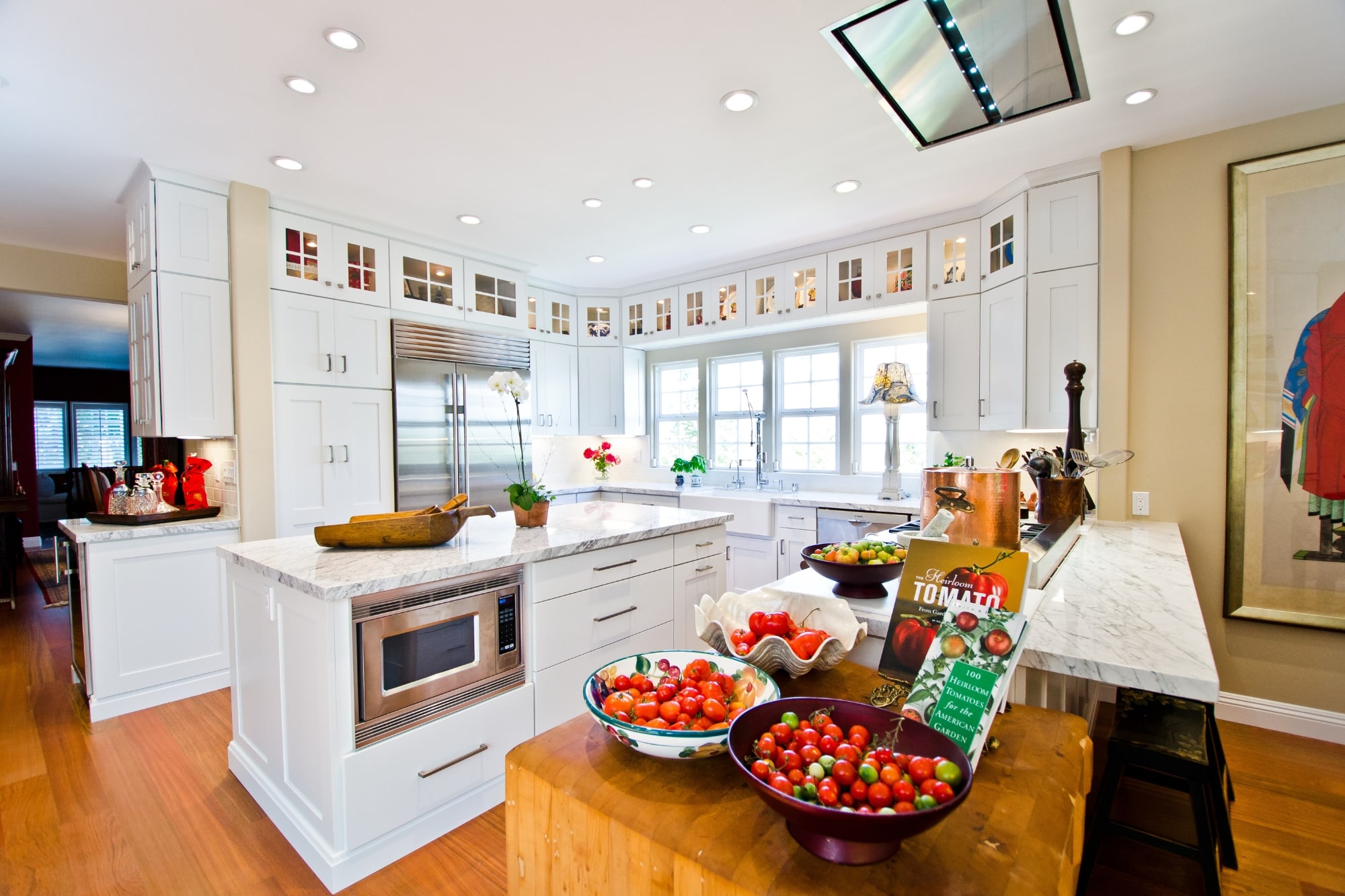
The kitchen shown above is one of our favorite examples of timeless design. Even though we completed it more than 10 years ago, the clean white cabinetry, warm wood floors, classic stone-look counters, and simple lines still feel fresh and current today.
Natural light, thoughtful storage, and a few well-chosen accents do the heavy lifting, rather than short-lived trends. It’s a great reminder that when you get the foundations right, your kitchen can stay current and inviting for many years without needing a full redesign every time styles change.
I’m Kimberly, Operations Manager at Kaminskiy Design and Remodeling. A question that comes up often in design conversations is:
How can a home feel current today without feeling dated a few years from now?
In this guide, we break down how to:
- Decide what should stay timeless and where it is safer to use trends
- Choose materials and colors that age well in San Diego’s light and coastal climate
- Add personality through layers that are easy to update later
- Avoid choices that feel tied to one specific year
- Make choices that still feel right five to ten years from now
Whether the project is a single room or a whole home, these principles support a design that feels both fresh and lasting.
🎧 Prefer to listen instead? Try the podcast version of this article to take in the same ideas in a different format, including how to balance today’s design trends with timeless choices that fit your San Diego home.
Key Takeaways: Timeless Now, Beautiful Later
If you only take a few ideas away from this, make them these:
- Anchor big-ticket items in timeless choices: Keep floors, cabinets, and layout classic; use trends on easier-to-change layers.
- Use trends in “low commitment” areas: Think paint, hardware, lighting, and décor instead of permanent surfaces.
- Let your home’s architecture lead: Design that works with your home’s bones will always feel more natural and enduring.
- Choose a cohesive palette that suits San Diego light: Soft, sun-friendly neutrals with a few curated accent colors age better than harsh contrasts.
- Design for how you really live: A space that functions well for your daily life will always feel “right,” even as styles shift.
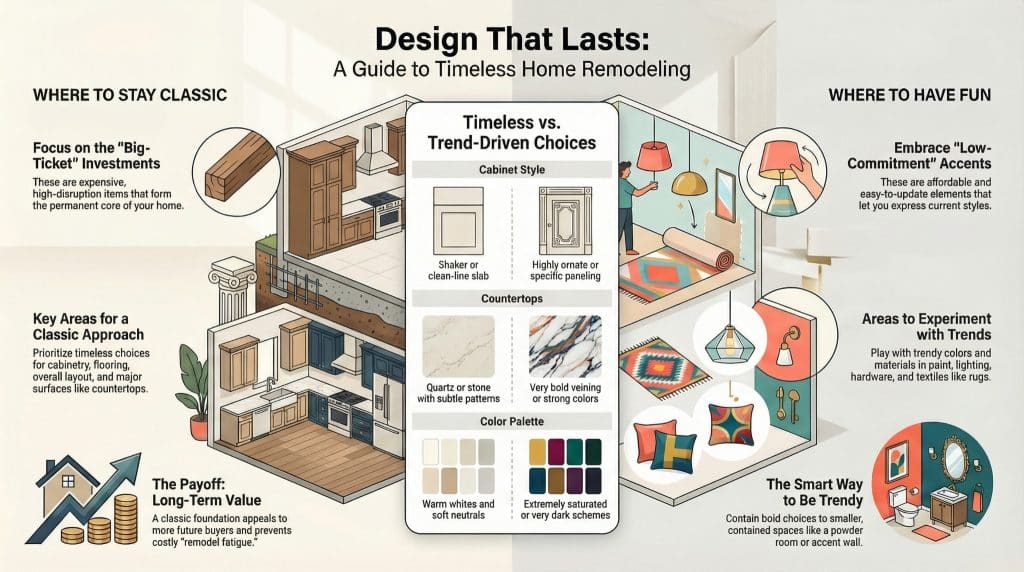
The infographic below provides a quick visual guide on where classic choices tend to age best and where trends are easier to use. It covers cabinets, countertops, color palettes, and accent layers. Use it as a reference as you move through the examples and decision points in the sections that follow.
Why Timeless Design Matters in a San Diego Remodel
San Diego homes often stay in families for decades, and many of our clients plan to enjoy their remodel for 10, 15, or even 20 years. That’s a long time for trends to come and go.
Timeless design does not mean bland design. It means making long-term choices where they matter most.
- Resale and long-term value
- Classic layouts and materials appeal to more buyers if you ever sell, especially when you plan your remodel with resale in mind.
- Overly specific trends can make a home feel like it belongs to one narrow moment in time.
- Reduce remodel fatigue
- You don’t want to feel pressure to redo tile or cabinets every time styles shift.
- Timeless foundations let you freshen the look with smaller updates.
- Better everyday living
- Spaces designed around real routines, like morning coffee, homework, and hosting, tend to stay relevant even as color trends shift.
- San Diego’s unique lifestyle
- Indoor–outdoor living, natural light, and coastal influences lend themselves to calm, enduring design.
- When a remodel builds on these strengths instead of fighting them, the result usually feels comfortable for a long time.
- One helpful question is: “How long do you expect to stay in this home?” The answer can guide how bold to be with permanent features versus items that are easier to update later.
What’s Truly Timeless and What’s Just Trending
Some features feel classic because we’re seeing them everywhere right now. Others have already stood the test of time. Separating the two makes it easier to make clear decisions.
Here is a simple way to think about it:
Start by identifying which choices should carry the long-term weight and which can reflect what feels current right now. In most cases, permanent surfaces stay calmer, while changeable layers can take more risks.
- Save a few inspiration photos you still love from 5–10 years ago. If you’re consistently drawn to similar shapes, tones, or layouts over time, that’s a great clue about your personal “timeless.”
Where to Stay Classic and Where to Have Fun
A remodel isn’t all or nothing. You don’t have to choose between “safe and boring” or “super trendy and risky.” A useful approach is to split the room into long-term investments and easy-upgrade layers.
Prioritize Timelessness In:
- Cabinetry and built-ins
- These are expensive and disruptive to change later.
- Clean profiles and neutral finishes give you flexibility for years to come. For current cabinet ideas, see the updated post on kitchen cabinet trends.
- Flooring
- Floors work best when they can pair well with future paint, rugs, and furniture.
- Warm woods and versatile tile look beautiful in San Diego light.
- Layout and structure
- Thoughtful traffic flow, sightlines, and storage never go out of style.
- A well-planned kitchen triangle or open-but-zoned great room will always feel practical.
- Major surfaces
- Shower walls, countertops, and large tile areas should have staying power.
- Subtle patterns let you change the room’s feel with textiles and accessories.
Experiment More With:
- Lighting and hardware
- Pendants, sconces, cabinet hardware, and faucets are easier to update later.
- You can lean into a trendier metal or shape knowing it’s not permanent.
- Paint and wallpaper
- Accent walls, powder rooms, or statement ceilings are great places to have fun.
- A new coat of paint is one of the easiest updates you can make down the road.
- Decor and textiles
- Rugs, pillows, bar stools, and art carry a lot of personality with low commitment.
- You can evolve these pieces as your taste or family needs change.
- If a bolder trend is a must, it usually works best in a contained area, like a feature niche, bar area, or powder room, rather than across an entire kitchen or great room.
Let Your Home’s Architecture Lead the Way
One common mistake is forcing a completely different style onto a house that was not built for it. That’s when spaces can quickly feel dated.
In San Diego, homes often include:
- Ranch homes
- Mid-century and post-war houses
- Spanish and Mediterranean-inspired architecture
- Newer tract homes with open-concept layouts
Instead of ignoring a home’s character, it helps to build on it:
- Mid-century: “Keep clean lines and warm wood, then update with softer, modern finishes.”
- Coastal or Mediterranean: “Highlight arches, plaster textures, and natural stone in a refined way.”
- Newer tract homes: “Add character through thoughtful millwork, built-ins, or lighting, while working with the existing structure.”
When your remodel feels like a natural evolution of your home, it’s much less likely to feel “off-trend” later.
Designing for How You Actually Live
A space that looks good but doesn’t work for your daily life will never feel timeless. Function is one of the most enduring design principles.
A helpful way to make choices that age well is to start with real routines:
- How many people use this space every day, and what wear-and-tear shows up most (kids, pets, sand)?
- Where does clutter collect now, and what storage would reduce it (entry drop zone, great room storage, pantry upgrades)?
- Who cooks, how often, and how many people are in the kitchen at once?
- How do you host most often (casual buffets, sit-down dinners, game nights, or a mix)?
Those answers usually point to improvements like:
- Smarter storage (pantries, drawers, entry storage)
- More comfortable traffic flow between rooms and to the backyard
- Materials that match your maintenance comfort level
- A remodel lasts longer when it reflects how the home is actually used. Be realistic about cooking habits, clutter, and maintenance tolerance. Then plan storage, surfaces, and layout around those patterns so the space still works years from now.
Pro Tips for Keeping Your Remodel Future-Proof
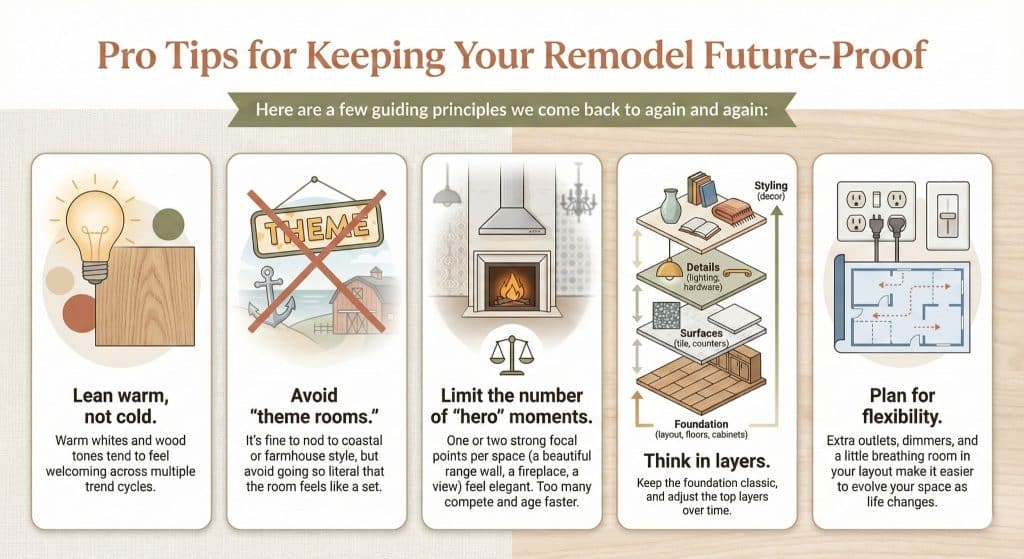
Here are a few guiding principles we come back to again and again:
- Lean warm, not cold
- Warm whites and wood tones tend to feel welcoming across multiple trend cycles.
- Avoid “theme rooms”
- It’s fine to nod to coastal or farmhouse style, but avoid going so literal that the room feels like a set.
- Limit the number of “hero” moments
- One or two strong focal points per space (a beautiful range wall, a fireplace, a view) feel elegant. Too many compete and age faster.
- Think in layers
- Foundation (layout, floors, cabinets) → Surfaces (tile, counters) → Details (lighting, hardware) → Styling (decor). Keep the foundation classic, and adjust the top layers over time.
- Plan for flexibility
- Extra outlets, dimmers, and a little breathing room in your layout make it easier to evolve your space as life changes.
Conclusion
Balancing trends and timeless design comes down to being intentional with what you make permanent. Keep big-ticket choices like layout, cabinetry, flooring, and major surfaces grounded in classic shapes and materials that will still feel right years from now. Use trend-forward choices in layers that are easier to change, like paint, lighting, hardware, and decor.
Let your home’s existing architecture guide the overall direction, and choose a cohesive palette that works well in San Diego’s natural light. Most importantly, design around how you actually live, since good function stays relevant even as styles shift. With these principles, a remodel can feel current today while still aging well over time.
Your Questions on Timeless, Trend-Savvy Remodeling
What does “timeless design” really mean in a San Diego home?
Timeless design means choosing layouts, materials, and colors that still feel right 10–20 years from now. In San Diego, that usually looks like warm woods, soft neutrals, classic cabinet styles, and spaces planned around indoor–outdoor living instead of whatever is trending this year.
How much of my remodel should be trendy versus classic?
A useful rule is to keep the big-ticket items timeless, such as flooring, cabinets, layout, and major tile surfaces. Then you can have fun with trends in lower-commitment layers like paint, lighting, hardware, décor, and textiles, which are much easier and less expensive to change later.
What design choices are most likely to look dated quickly?
Highly specific colors, themed rooms, and very bold patterns on permanent surfaces tend to age the fastest. Think ultra-busy tile, extreme gray or dark flooring, or a room that leans too hard into one style (like full-on farmhouse). Using those ideas in small doses or in easily updated areas keeps your home feeling current longer.
How do you help clients find their own “timeless” style?
Start by looking at inspiration photos you have loved for years, not just what’s on your feed this week. Then we look for patterns in shapes, tones, and layouts you’re drawn to and build a design that fits your home’s architecture, your daily routines, and your long-term plans.
Does timeless design mean my home will feel boring or too neutral?
Not at all. Timeless design is about smart foundations, not bland rooms. Personality can come through artwork, textiles, accent colors, statement lighting, and smaller high-impact areas like a powder room or bar area. Those are good places to use bolder choices.
When should I bring in a designer to help balance trends and timelessness?
If the project includes a kitchen, bathroom, or multiple rooms, bringing in design support early can help keep decisions consistent across the plan. Early planning is also useful for aligning layout, finishes, lighting, and budget, and for choosing materials that fit the home’s natural light and maintenance needs.
These FAQs cover the most common decision points when balancing trends and timeless design. Keep major elements classic, use trends in easy-to-change layers, let the architecture guide the direction, and prioritize function.

Kimberly Villa is the Operations Manager at Kaminskiy Design and Remodeling, where she has spent more than a decade involved in projects from pre-design through post-construction. Her experience in the remodeling industry spans nearly two decades across both East Coast and Southern California markets, giving her a firsthand view of how San Diego remodels unfold, from the first budget conversation to the final walkthrough. That day-to-day experience shapes the articles she writes for the Kaminskiy blog, where she helps homeowners make informed decisions before, during, and after a remodel. Before publication, each article is reviewed for accuracy by a Kaminskiy team member with relevant project expertise, such as a licensed architect, certified designer, or project manager.