
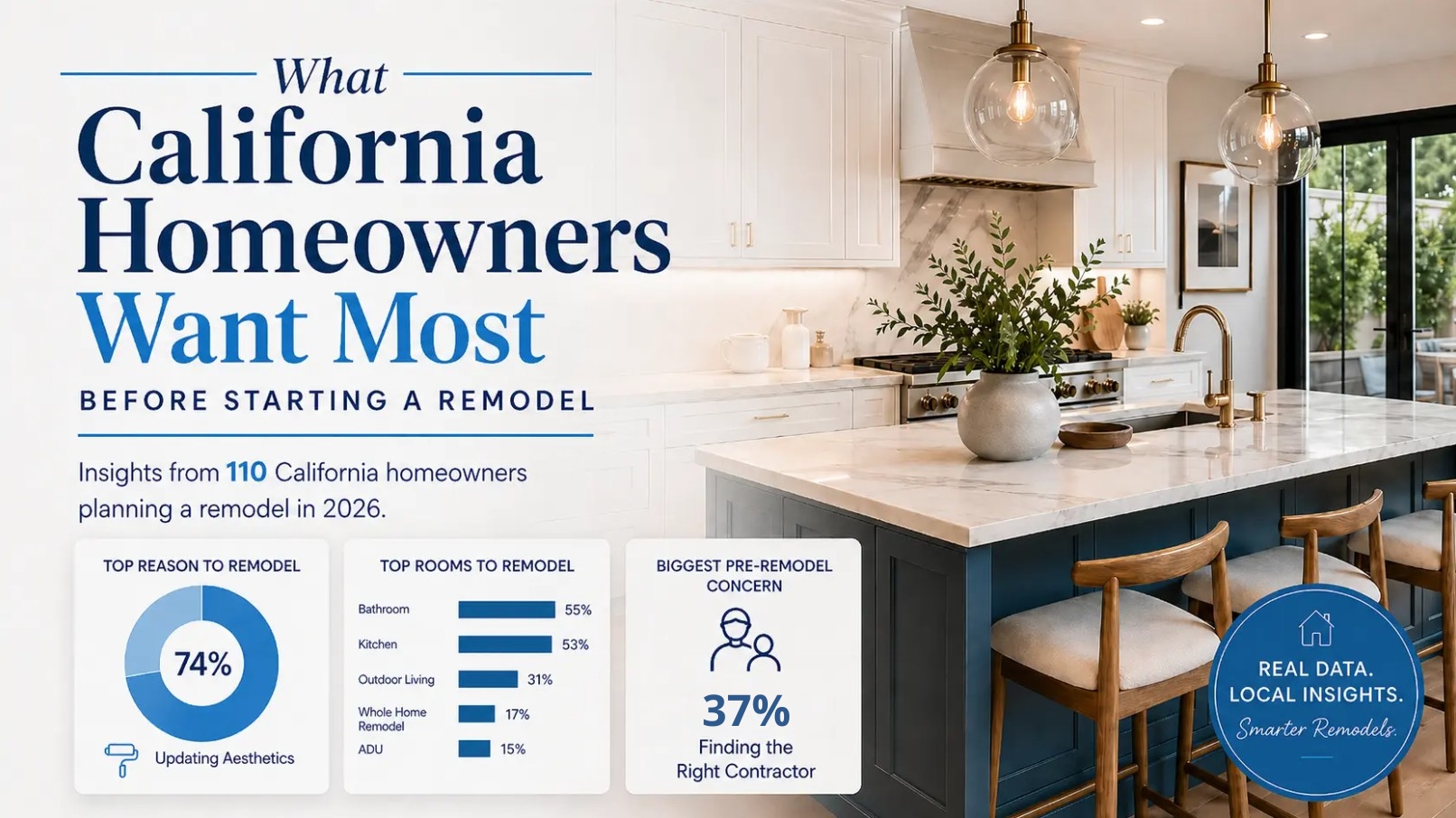
What California Homeowners Want Most Before Starting a Remodel
Planning a remodel is stressful. Most people end up staring at the exact same pile of questions before they even swing a hammer. You need to know if the updates will actually boost your property value or just drain your savings. You want a realistic grip on pricing. And then there is the contractor hunt. Finding someone reliable to tear your house apart is easily the hardest part of the entire process.
To figure out what is actually driving today’s remodeling market, Kaminskiy Design and Remodeling polled 110 California homeowners on April 14 and 15, 2026. We only looked at people actively in the market. All 110 participants were single-family homeowners aged 30 to 65. They reported household incomes exceeding $200,000. Most importantly, none of them were just dreaming about future updates. Every person surveyed is scheduled to start construction within the next year.
The data points to a very clear reality. People want spaces that look modern and function seamlessly. They also want upgrades that hold their long-term value. But they are incredibly cautious about who they hire to pull it off. Throughout the survey, two major themes dominated the conversation: securing a trustworthy contractor and a strong preference for modern design. Maximizing return on investment was another major priority.
Prefer the data in one document? Skip to the free PDF download at the end of this article.
Key takeaways
- Looks and value come first. Most people remodel because they want a visual refresh, followed closely by a desire to bump up their home’s resale price. Better usable space is the third most common goal.
- Kitchens and baths still dominate. These two rooms are the clear priorities. Upgrading the backyard and outdoor living areas is running a very close third.
- Modern style is winning. Contemporary aesthetics led the pack. That said, older demographics and higher-income brackets showed strong interest in sustainable materials and luxury finishes.
- Hiring is scarier than paying. Finding a contractor you can trust is the single biggest source of anxiety. It actually worries people more than the final project cost.
- Reputation beats cheap bids. Word of mouth is everything. Homeowners care far more about a builder’s reviews and personal referrals than they do about getting the lowest possible price.
- Budget anxiety is universal. Design preferences shift dramatically depending on a person’s age. But the fear of hiring a bad contractor stays exactly the same, no matter how much money someone makes.
Real projects, not just daydreams
This data isn’t just wishful thinking. Every single person we spoke to has a firm timeline. Fifty percent of the group expects to start construction in under 90 days. The rest are aiming for the three- to twelve-month mark. They are pulling permits and setting budgets, not just scrolling through design blogs.
Getting ready to start your own remodel? These numbers give you a direct look at what your neighbors are prioritizing right this second.
The push for a better-looking space
We asked people exactly what pushed them to finally remodel. Upgrading the overall look was the most common answer by a landslide. Almost 74% of the group just wanted to get rid of an outdated aesthetic. Boosting home value came in second at 46.36%. The need to create more space followed at 40.91%. Things like energy efficiency and aging-in-place modifications were on the radar, but they definitely took a backseat.
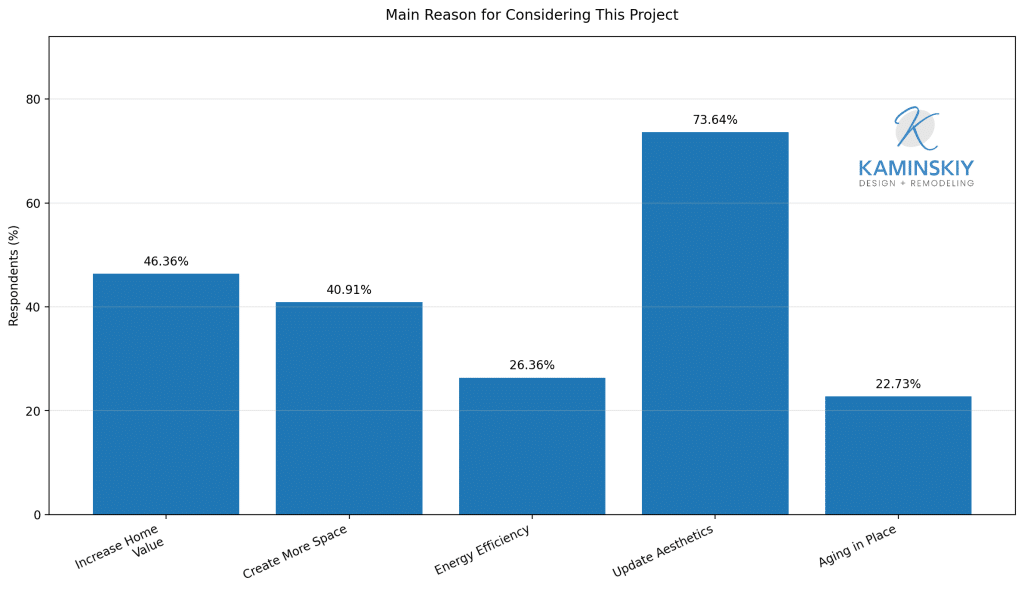
This data is revealing because it highlights the core problem homeowners are trying to solve. They aren’t starting with a desire to buy lumber or pick out tile. They are starting from a place of daily frustration. Maybe the kitchen finishes are stuck in the past. Maybe the floor plan acts as a bottleneck for family life. Even if the house still technically “works,” it simply isn’t comfortable or beautiful enough anymore.
Kitchens and baths reign, but backyards are booming
When asked which specific spaces were on the chopping block, bathrooms took the top spot (55.45%). Kitchens followed right on their heels at 52.73%. Outdoor living spaces captured a massive 30.91% of the focus, comfortably beating out full-house guts and accessory dwelling units (ADUs). Room additions also fell much lower on the list.
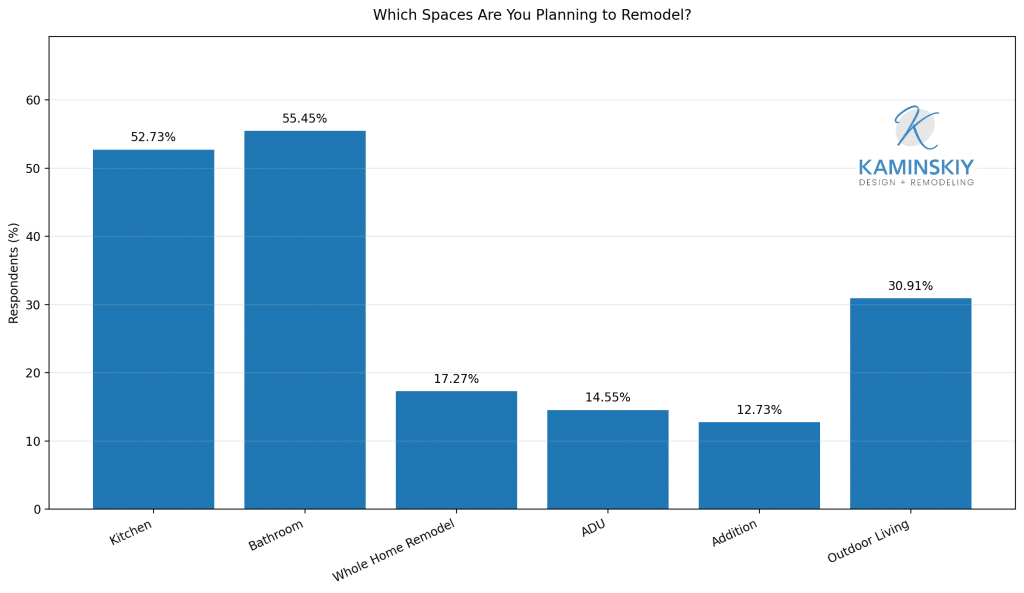
This is a great reminder that we tend to invest in the rooms we use the most. Kitchens and bathrooms dictate your daily routine and your comfort level. They also carry serious weight for your property’s resale value. Outdoor living offers a completely different type of lifestyle upgrade. Especially in California, transforming a backyard effectively adds a brand-new wing to the house that can be utilized all year long.
The real pain point: ugly finishes, not tight quarters
A massive takeaway from the survey is that feeling cramped isn’t actually the primary frustration for most people. “Outdated finishes” was the leading pain point by a wide margin (34.55%), followed by general functionality issues (23.64%). A sheer lack of space and poor layout flow tied at just 14.55%. Energy efficiency trailed behind at 12.73%.
When you slice the data demographically, older homeowners are much more likely to complain about dated fixtures and ugly finishes. Younger homeowners are the ones fighting against awkward layouts and a lack of square footage.
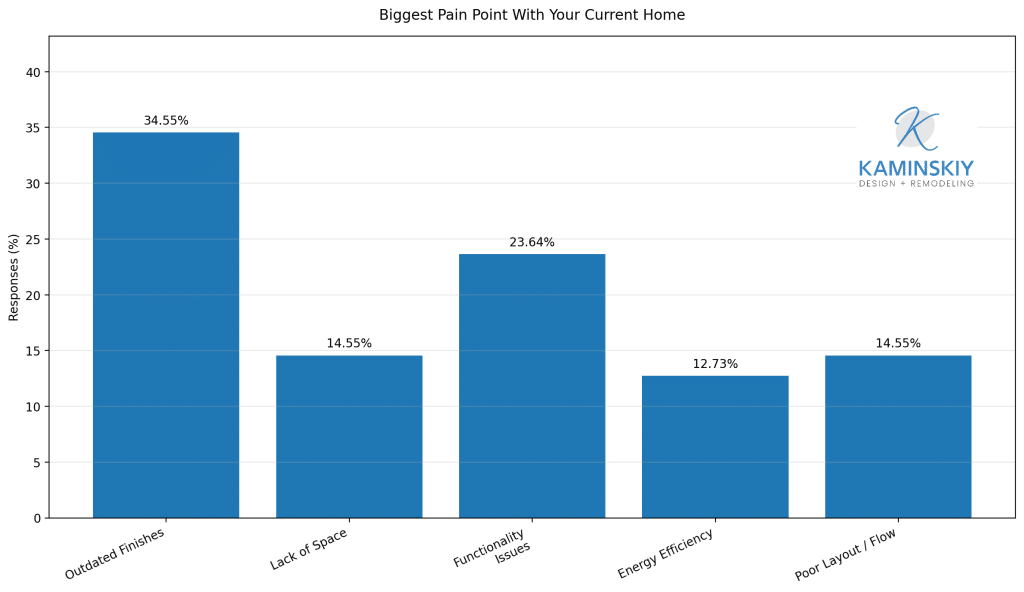
If you are trying to nail down the scope of your own project, this is a helpful reality check. Sometimes you really do need an addition. But more often than not, the real issue is just that the home feels old or doesn’t support your routine. You might not need more space. You might just need the space you already have to work smarter.
Modern design dominates, but tastes are nuanced
When it comes to style, modern design is the clear favorite, securing 60.91% of the vote. Traditional aesthetics followed at 37.27%. Luxury (32.73%) and eco-friendly looks (31.82%) rounded out the top tiers. Transitional and coastal styles sat much lower on the list, alongside farmhouse designs.
A closer look at age and income brackets adds some fascinating color to the numbers. The 35-to-44 age group leans heavily into modern design. Older generations show a much stronger affinity for traditional and sustainable elements. High-end luxury and eco-conscious designs see a major spike in demand among upper-income and middle-aged demographics.
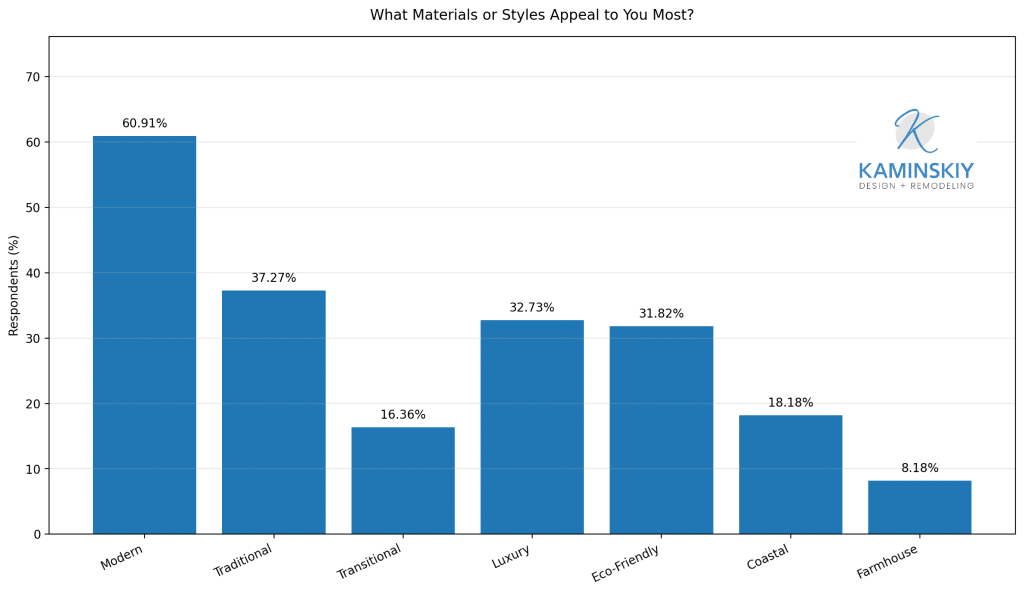
The takeaway here is that “modern” isn’t a one-size-fits-all solution. People are curating their style based on deep personal values. For some, that means clean, contemporary lines or warm, sustainable materials. For others, it comes down to luxurious, long-term flexibility.
The number one roadblock: finding a contractor you trust
This is a massive insight.
When asked about their biggest fear before starting a project, respondents ranked “finding the right contractor” at the very top (37.27%). Budget worries came in second at 30.91%. Design paralysis sat at 27.27%. Interestingly, anxiety about the project timeline barely registered at just 4.55%.
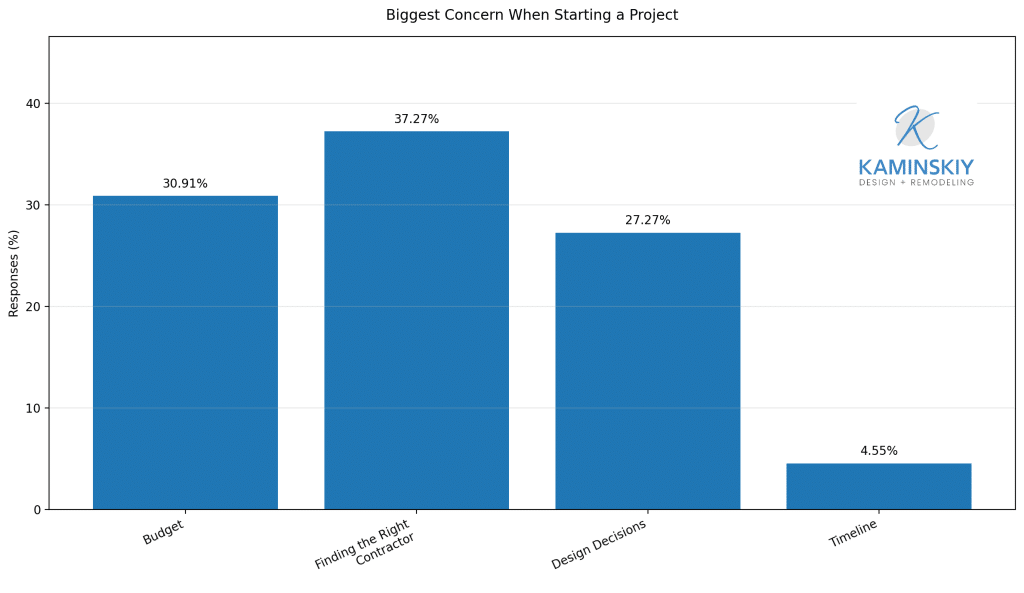
This fear of hiring the wrong team holds incredibly steady across different home types and tax brackets. Cost is always a factor, but before people even start crunching numbers, they are desperately trying to mitigate risk. Homeowners are terrified of hiring a bad company or suffering through terrible communication. Nobody wants to get trapped in a stressful, expensive nightmare.
When broken down by income, the trend is undeniable:
- $200k to $249k: 38.2% cited finding a contractor as their top fear, versus 34.5% for budget.
- $250k to $499k: 37.8% prioritized contractor selection. Budget concerns dropped to 24.4%.
- Over $1 Million: Among the wealthiest households surveyed, absolutely zero respondents named budget as their primary concern. Trust and design execution were their sole worries.
This proves that anxiety over contractors isn’t just about avoiding a financial scam. It is about securing peace of mind.
Budget still matters, but it’s part of a larger equation
The most common budget range in the survey was between $25,000 and $50,000, representing 27.27% of respondents. The next largest groups were planning to spend $50,000 to $100,000 (24.55%) or keeping things under $25,000 (22.73%). A smaller segment planned for $100,000 to $250,000 (14.55%). About 10.91% were gearing up for massive overhauls exceeding $250,000.
This data provides a great perspective. Not everyone is starting with a massive, six-figure gut-job; most are under $50,000. Unsurprisingly, the numbers also show that budget heavily dictates style. Those with deeper pockets naturally gravitate toward high-end luxury materials.
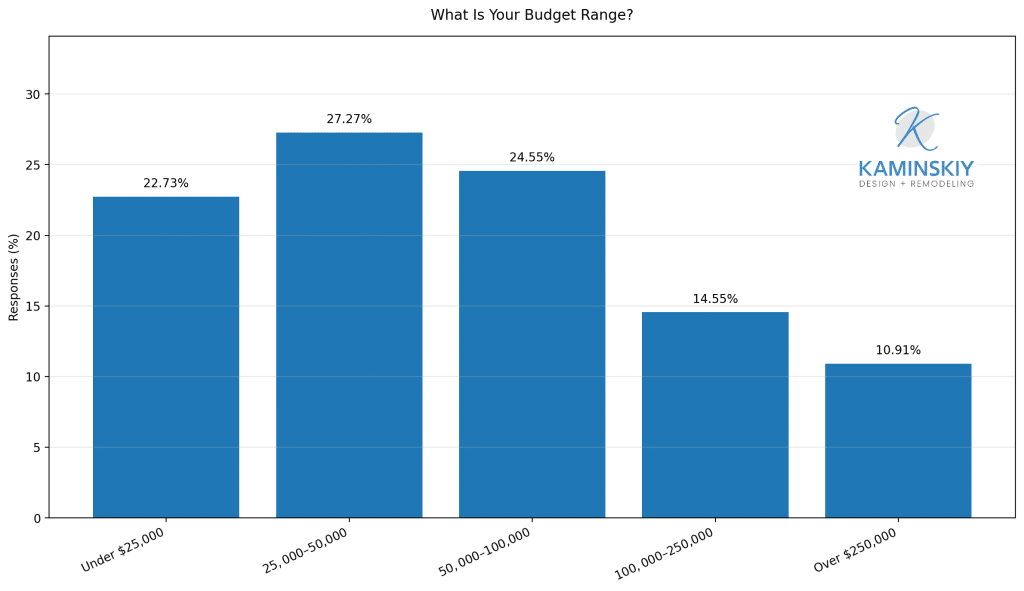
But cost is never evaluated in a vacuum. Homeowners are constantly weighing the price tag against their design dreams. The contractor’s communication skills and overall reliability play an equally huge part in the final choice.
Word of mouth is still the ultimate marketing tool
How do people actually track down these elusive, trustworthy builders? Personal referrals from family and friends absolutely dominate the discovery phase at 57.27%. General Google searches sit at 38.18%. Dedicated home improvement platforms like Houzz and Yelp follow at 33.64%. Social media trails at 22.73%.
There is a generational divide here. Younger homeowners are much more willing to use social media for discovery. Older generations rely almost entirely on their personal network.
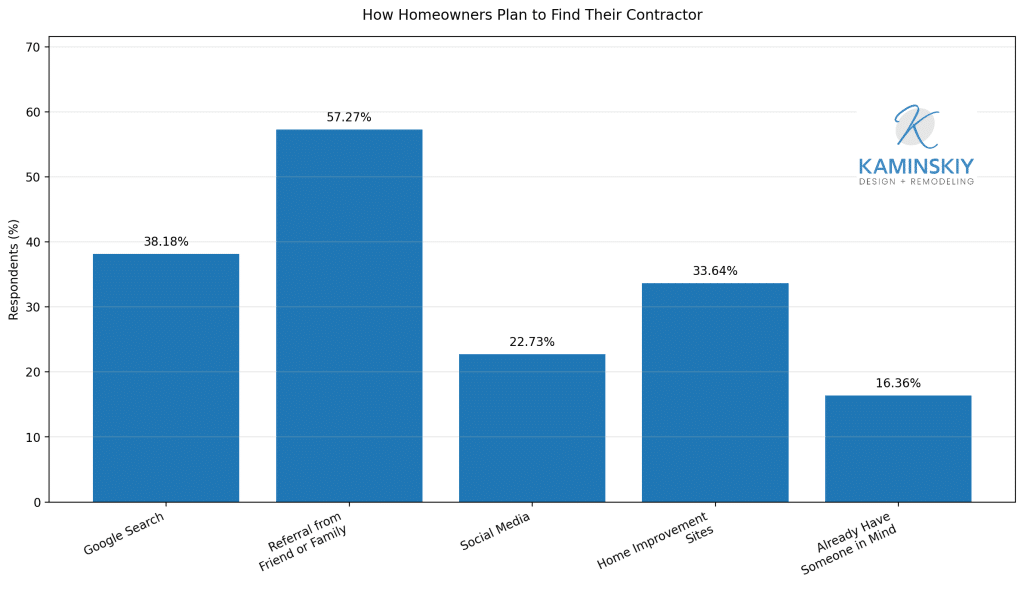
Because remodeling is such a high-stakes, high-cost industry, personal validation is worth its weight in gold. A direct recommendation from a friend removes a massive amount of the inherent risk. That said, digital research is still a vital part of the puzzle. Most homeowners take those personal referrals and cross-reference them against online portfolios and public reviews before ever making a phone call.
Reputation easily beats the lowest bid
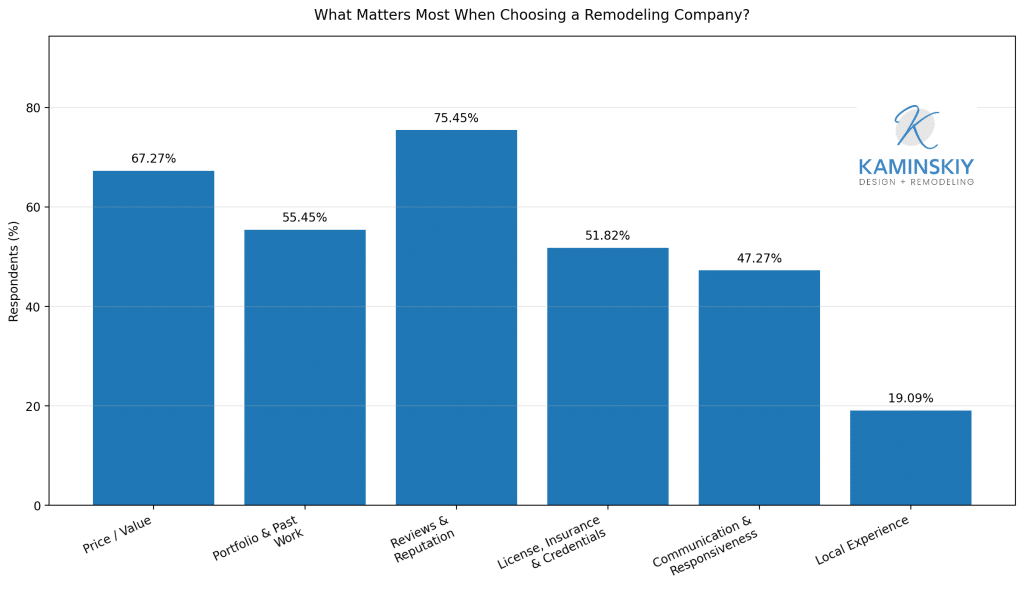
When evaluating a potential hire, what actually seals the deal? According to the survey, reviews and overall reputation (75.45%) matter significantly more than price and perceived value (67.27%). A strong portfolio of past work and proper licensing also hold massive weight. Responsive communication is just as important.
If you are currently collecting bids, this is your sign that the cheapest estimate isn’t always the best one. Homeowners want undeniable proof. They want to read what past clients have to say and see the quality of the finished jobs. Verifying insurance and knowing the company will pick up the phone when things get complicated are just as crucial.
What this means for your upcoming remodel
If you are mapping out a renovation, these findings point to a very simple truth. You aren’t just looking for Pinterest inspiration. You are looking for clarity and confidence.
You want to know what actually moves the needle on home value. You want a realistic grasp of timelines and budgets. Most importantly, you want to feel totally secure before you hand over a deposit check. This survey proves that thousands of other California homeowners are trying to solve those exact same puzzles. They want modern, functional spaces, and they are terrified of hiring the wrong team.
For readers down in San Diego, these state-wide trends are incredibly relevant. How do you maximize the house you already own? How do you balance aesthetics with a strict budget? How do you find a builder who won’t disappear on you? Those hurdles aren’t unique to your neighborhood. They are universal across the state, which is exactly why understanding this data is the best first step you can take.
Save or share the full report
Download the complete 11-page survey report with every chart, the income breakdown, and our methodology. Share it with your spouse, your designer, or anyone helping you plan.
Download the PDF Schedule a ConsultationFAQ
What was the biggest reason homeowners wanted to remodel?
The primary motivator was updating aesthetics. Increasing the property’s value and creating more functional space were the next biggest drivers.
Which rooms are homeowners most likely to remodel first?
Bathrooms and kitchens comfortably took the top spots. Upgrading outdoor living spaces is also seeing a massive surge in demand.
What design style was most popular?
Modern design was the definitive leader. Tastes shift depending on a homeowner’s age and budget, revealing strong niche demand for traditional and high-end luxury styles. Eco-friendly aesthetics are also making a major impact.
What worries homeowners most before starting a remodel?
Finding the right contractor easily outranked budget constraints as the single biggest point of anxiety.
How do most homeowners find a contractor?
Personal referrals from family and friends are still the ultimate discovery tool. Standard Google searches and dedicated home improvement review platforms are the next most common methods.
What matters most when choosing a remodeling company?
Exceptional reviews and a bulletproof reputation ranked first. This ultimately held more weight than pricing or a slick portfolio. Credentials and strong communication styles were also critical.
Methodology
Kaminskiy Design and Remodeling conducted this survey on April 14 to 15, 2026. It included 110 California homeowners who owned a single-family home, were between the ages of 30 and 65, had household income above $200,000, and were planning a home renovation within the next 12 months.

Kimberly Villa is the Operations Manager at Kaminskiy Design and Remodeling, with nearly two decades in the remodeling industry across both East Coast and Southern California markets. That day-to-day experience, from the first budget conversation to the final walkthrough, shapes the articles she writes for the Kaminskiy blog, helping homeowners make informed decisions before, during, and after a remodel. Before publication, each article is reviewed for accuracy by a Kaminskiy team member with relevant expertise, such as a licensed architect, certified designer, or project manager.