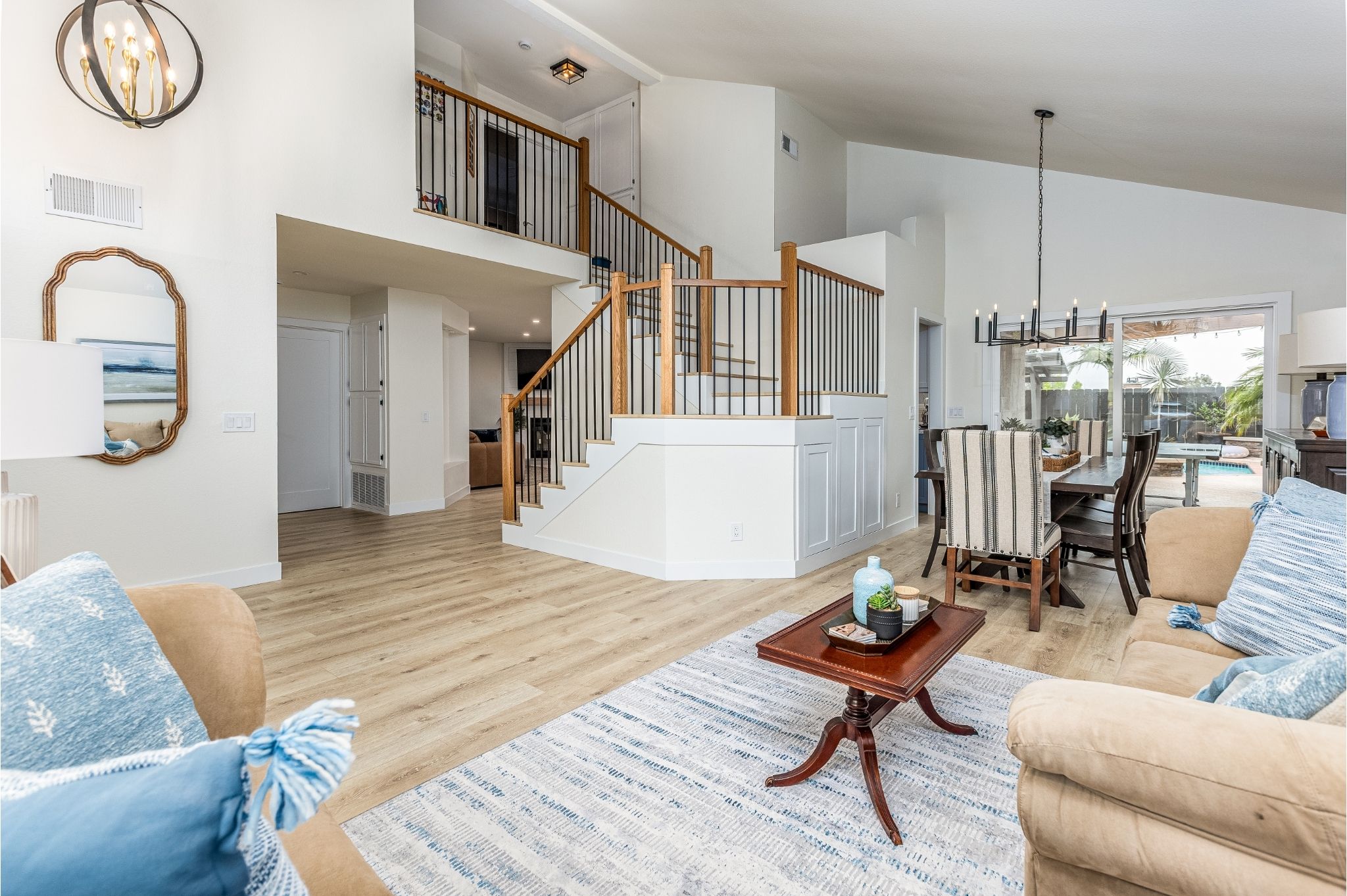
Not everyone can (or wants to) remodel their entire home in one shot. Maybe you want to stay living in the house. Maybe the budget is better in stages. Maybe permits or material lead times make it easier to spread things out. Good news: you can absolutely phase a remodel — you just have to plan it that way from the start.
This guide walks through how we like to phase projects in San Diego, so you don’t redo work, blow the budget later, or end up with a home that looks like it was remodeled across three different decades.
Prefer to listen instead? We talked through this exact “remodel it in stages” strategy on the podcast: how to pick Phase 1, what to permit now, and how to keep everything looking cohesive. Hit play if you’d rather hear it.
Why this matters: Most remodel headaches happen when people take on projects one by one without a bigger roadmap — and then Phase 2 breaks Phase 1. When you plan the whole house once and build it in steps, you still end up with that finished, cohesive home… just on a timeline and budget that actually fits real life.
Think of it like building a puzzle in sections. Design the whole picture first, then install the pieces in the smartest order. Starting with the stuff that affects everything else (structure, systems, layout) and saving the lower-disruption, more “fun” areas for later. The sections below walk through the order we recommend for San Diego homes so you don’t redo work, blow the budget later, or end up with mismatched spaces.
This is the biggest mistake homeowners make: they do one room, then two years later do another, but the second one forces changes to the first.
A better way:
That way, you’re not moving a wall in Phase 2 that you just paid to drywall and paint in Phase 1.

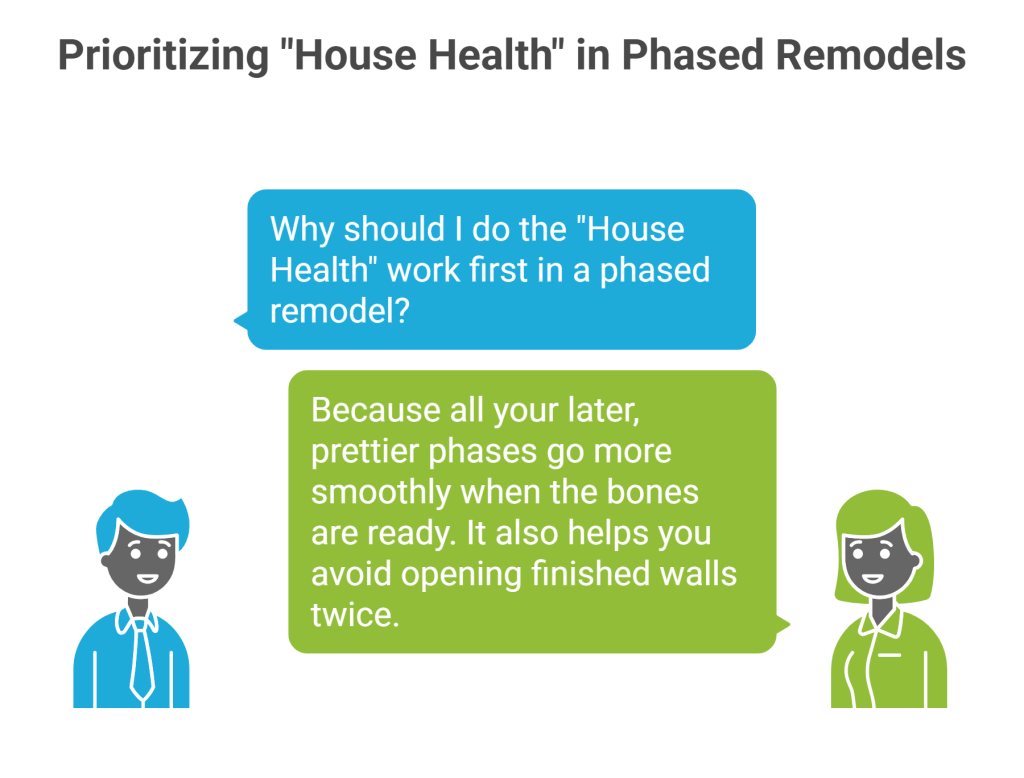
In San Diego, many homes are older, have DIY additions, or need updates to support modern kitchens and HVAC systems. If you’re phasing, it’s smart to tackle the foundational stuff first:
Why? Because all your later, prettier phases go more smoothly when the bones are ready. It also helps you avoid opening finished walls twice.
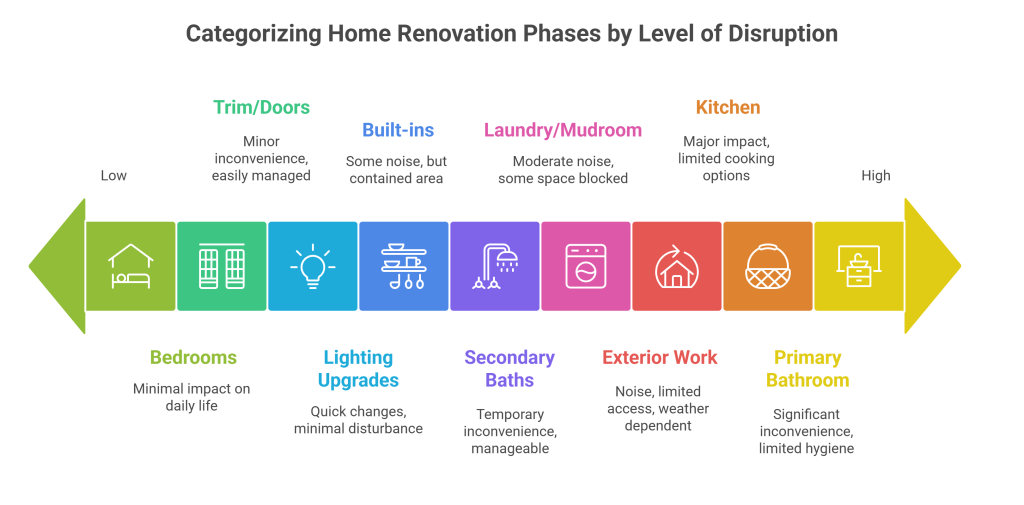
Think about what affects daily life the most, and either do it first… or time it during a period you can handle the disruption.
High-disruption areas:
Medium-disruption areas:
Low-disruption areas:
A smart phased plan might look like:
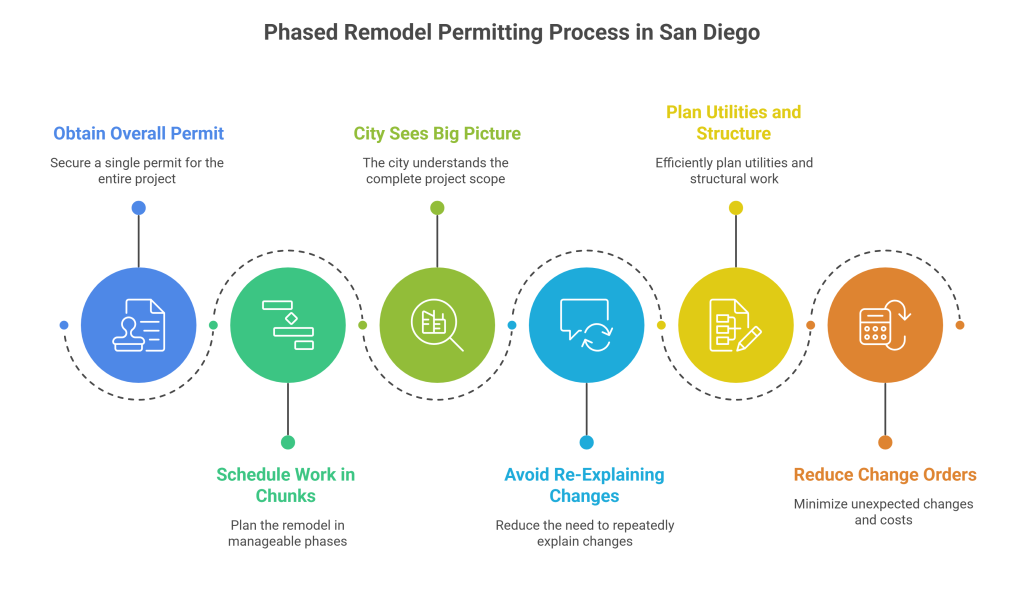
This is one of those San Diego-specific tips.
Sometimes it makes sense to:
Why this helps:
This big-picture permit strategy can reduce avoidable change orders. See how we handle change orders in San Diego remodels and what to expect when permitting a remodel in San Diego. Ask your designer if it fits your project scope.
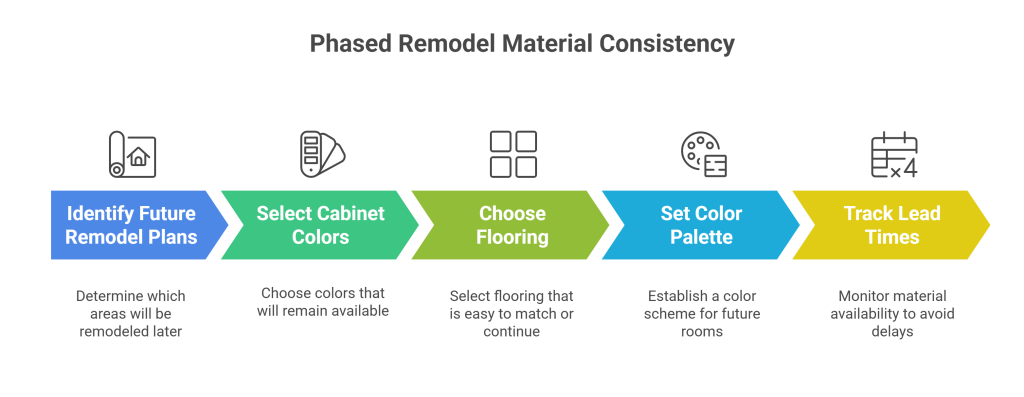
If you’re remodeling in phases, material continuity helps the home feel cohesive. Choose cabinet finishes that are likely to remain available, pick flooring that can be continued or closely matched later, and set a consistent palette so future rooms still feel intentional.
This helps avoid the situation where the first phase feels coastal and the second phase feels Tuscan.
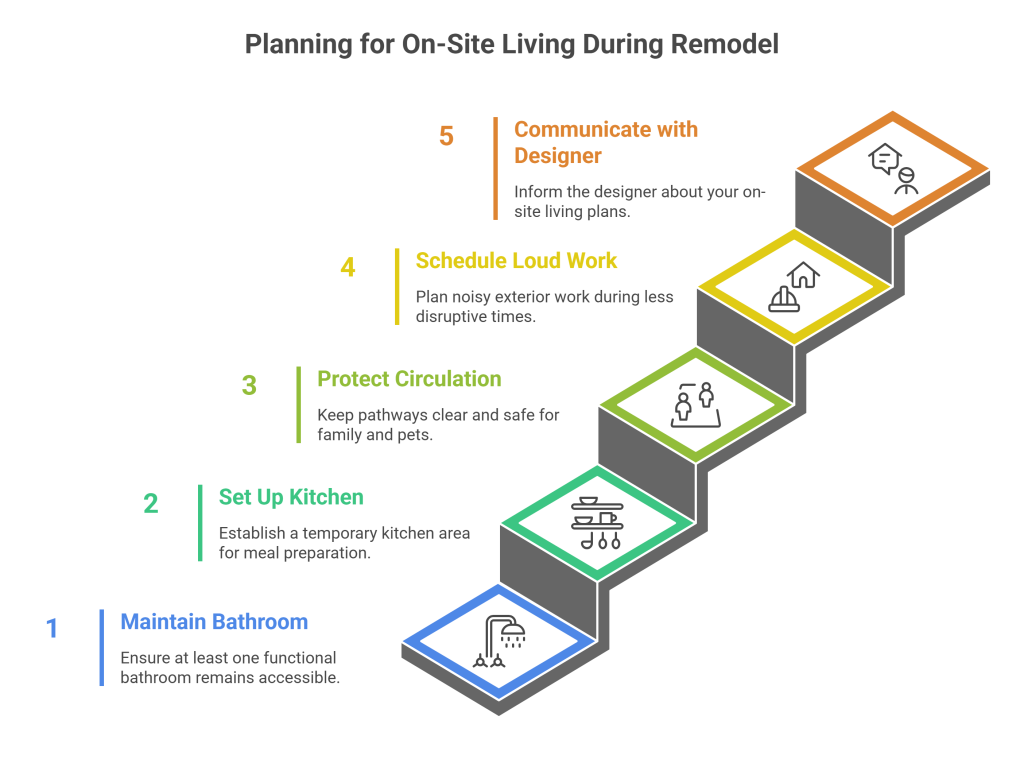
Many San Diego homeowners stay in their homes during construction. Phasing is often easier when the plan accounts for day-to-day living during construction.
Key planning questions:
In many projects, a simple temporary kitchen setup is planned so the household can stay on-site during construction. Flag this early so sequencing can prioritize livability.
Phasing is often about cash flow.
If you tell us:
…we can build a plan where Phase 1 does the critical/complex stuff, and Phases 2–3 are more finish-driven.

Here’s the exact sentence you can put on the intake form or say in your consult:
“I want the whole house to feel cohesive, but I need to do it in 2–3 phases. Please design it as one plan and help me prioritize what to do first.”
That allows us to think long-term, not just “this room.”

Phasing a whole-home remodel works best when it is approached as one complete plan that is built in stages, rather than a series of disconnected projects. The goal is to keep the home livable when needed, minimize rework, and make sure every phase fits the same long-term design.
In this article, we covered how to phase a remodel in a way that stays efficient and cohesive:
Done well, a phased approach lets the home improve step by step while still reaching a unified end result that feels planned and cohesive.
It can be slightly more expensive over time because you’re mobilizing crews multiple times, and materials can go up year to year. But planning a single master design up front minimizes that, and for many families, the ability to stay in the home or spread the cost is worth it.
Often yes, especially if we sequence it right — for example, don’t do the only bathroom and the kitchen at the same time. We can set up temporary kitchens, protect walkways, and schedule loud work at times that work best for you. Tell us early that you plan to stay on-site so we can phase for livability.
It depends on the scope. For big, house-wide changes, a single permit that shows the full vision can make future phases smoother, since the city has already seen the plan. For very small or unrelated projects, separate permits may be fine. We can advise once we have seen your house and your goals.
You can space phases out by months or even a couple of years, but it’s smart to check material availability and code changes if a long time passes. That’s why we pick finish families and products that will still be around when you’re ready for Phase 2.
Anything structural, safety-related, or system-related: panel upgrades, major plumbing reroutes, HVAC changes, and layout changes that affect multiple rooms. Doing those first prevents you from opening up finished rooms later.
Just be clear about intent: “I want a cohesive, finished home, but I need to do it in 2–3 stages. Please design it as one plan and help me prioritize.” Good design-build teams love that kind of clarity because it lets us give you a roadmap instead of one-off projects.
These answers cover the most common planning questions homeowners ask before starting a phased remodel.

Kimberly Villa is a recognized expert in the Home Design and Remodeling industry. Her passion for the industry is matched only by her love for sharing insights, new trends, and design ideas. Kimberly’s expertise and enthusiasm shine through in her contributions to the Kaminskiy Design and Remodeling website blog, where she regularly shares valuable information with readers.