
What Happens Between “Contract Signed” and “Demo Day” in a San Diego Remodel
You signed. You’re excited. And then… it gets quiet.
For many San Diego homeowners, this is the moment they start wondering, “Is anything happening with my project?” The answer is yes — a lot is happening, it’s just the part of the remodel you don’t always see. Before our team shows up with protection, tools, and trades, we’re lining up permits, materials, and people so construction actually runs smoothly.
This post walks you through what’s happening behind the scenes at a design-build firm like Kaminskiy between the day you approve your project and the day demo starts.
🎧 Prefer the podcast version? We walked through this exact pre-construction phase — what we’re doing in the office, what slows projects down, and how homeowners can help. Hit play there if you’d rather listen than read.
Key Takeaways
- That “quiet” time after you sign is actually the pre-construction phase.
- We’re locking your scope and selections so we can order the right materials.
- We’re working with the City/HOA (San Diego can add extra steps).
- We’re ordering long-lead items to keep your project moving.
- We’re scheduling trades and planning site protection so day 1 runs smoothly.
- The faster you make decisions and send us info, the sooner we can release your start date.
Most homeowners only see the part where crews show up — not the weeks of lining things up so the job doesn’t start and then stall. This is that part you don’t usually see. If you’ve ever wondered, “What are they doing while I’m waiting?”, the next sections spell it out step by step so you know your project really is moving.
What’s Actually Happening Behind the Scenes?
Before anyone shows up with tools, there’s a whole wave of activity that has to happen first — decisions to lock, permits to chase, materials to order, trades to line up. This is the “invisible” part of remodeling that most homeowners never get to see, and it’s what makes on-site work faster and cleaner. So in the sections below, we’re pulling the curtain back and showing you, step by step, what we’re doing for your project in that quiet window.
1. We Lock Your Scope and Selections
Before we can build, we have to make sure we’re all building the same version of your project.
That means your designer or project manager will confirm:
- Cabinets and door style
- Plumbing fixtures and finishes
- Tile layout and grout
- Countertops
- Flooring
- Windows/doors (if applicable)
- Appliances
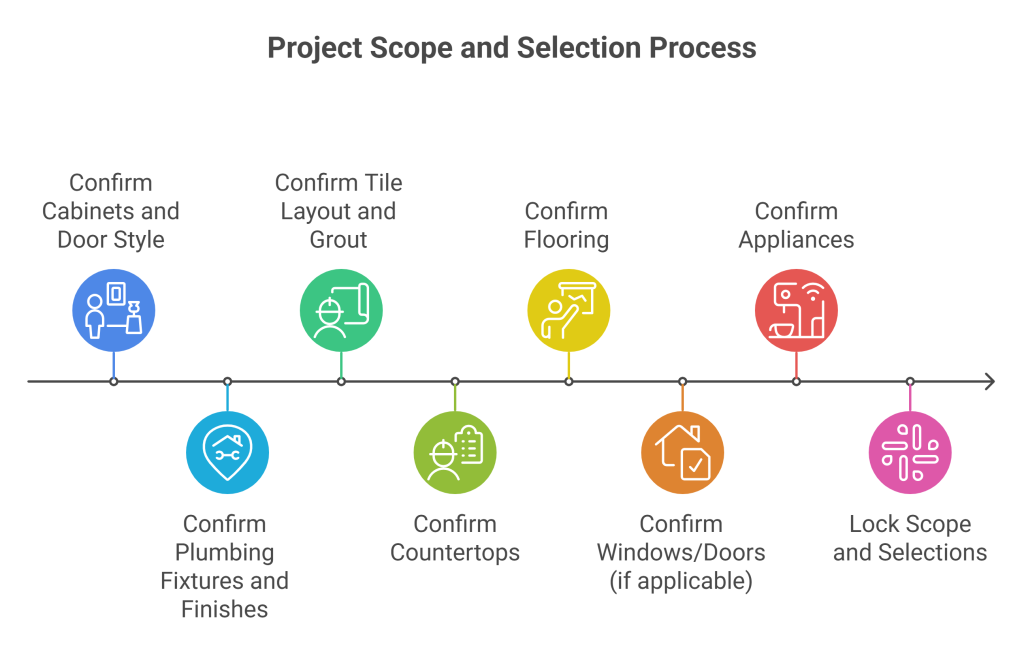
Why this matters: We can’t order materials or schedule certain trades until these are decided. If selections stay open too long, it pushes the start date. This is also the best time to make small changes — they’re much easier (and cheaper) to handle now than after framing or rough-in.
San Diego note: some finishes and windows take longer to come into our market, so locking them in early keeps your timeline realistic.
2. We Handle Permits, HOA Approvals, and Local Requirements
Not every project needs a permit, but many in San Diego do — especially if we’re moving walls, changing structure, adding an ADU, or touching exterior elements.
During this phase, we may:
- Submit plans to the City of San Diego or your local jurisdiction
- Respond to plan check comments
- Prepare and submit HOA packages (colors, elevations, materials)
- Coordinate any coastal or historic requirements, if your home is in those zones
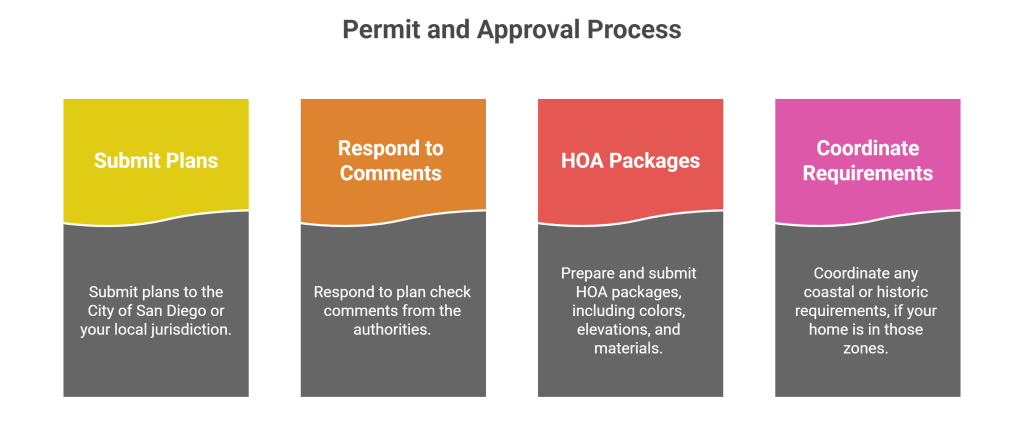
From the outside, it can look like “nothing is happening,” but inside our office, it’s a lot of emailing, revising, and resubmitting to keep your project from being delayed or red-tagged once we’re on site.
3. We Order Long-Lead Materials So Your Project Doesn’t Stall
One of the biggest reasons remodels drag on is that demo happens before materials are ready.
We try to do the opposite.
Right after we finalize selections, we place orders for items that typically take the longest:
- Custom cabinets
- Specialty or imported tile
- Custom windows and doors
- Certain appliances
- Shower glass (if it can be ordered early)
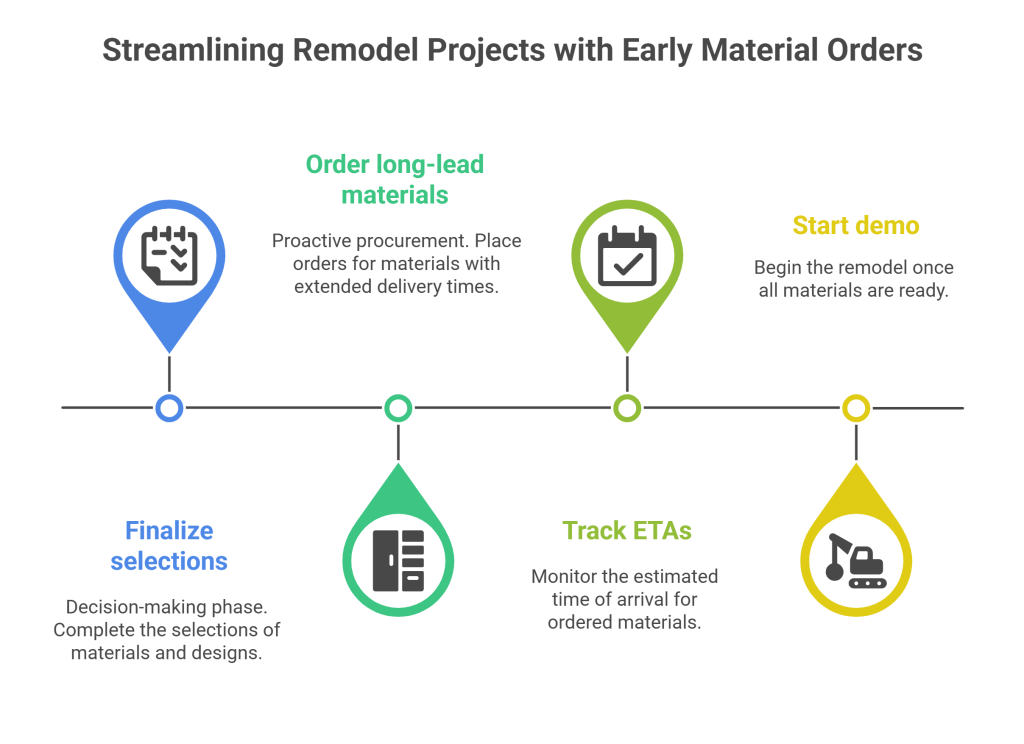
Then we track ETAs so we know when it’s safe to start. We want to minimize the time you spend in a construction zone.
Why we don’t start tomorrow: starting demo before the essential materials are on the way can leave you without a kitchen or bath longer than necessary. We’d rather start a week later and keep moving than start today and leave you in limbo.
4. We Do Trade Walks and Build the Actual Construction Plan
This is pure behind-the-scenes work, but it’s what makes the project feel organized once we start.
Your project manager will often walk the job with key trades:
- Electrician
- Plumber
- Framer
- Drywall/finishes
- Sometimes, HVAC or low-voltage
We confirm things like:
- How we’re getting materials into the house (tight San Diego side yards!)
- Where can we stage tools
- Whether the existing electrical panel can handle the new load
- Any surprises in the existing structure
- Access, parking, and dumpster location (big in older SD neighborhoods)
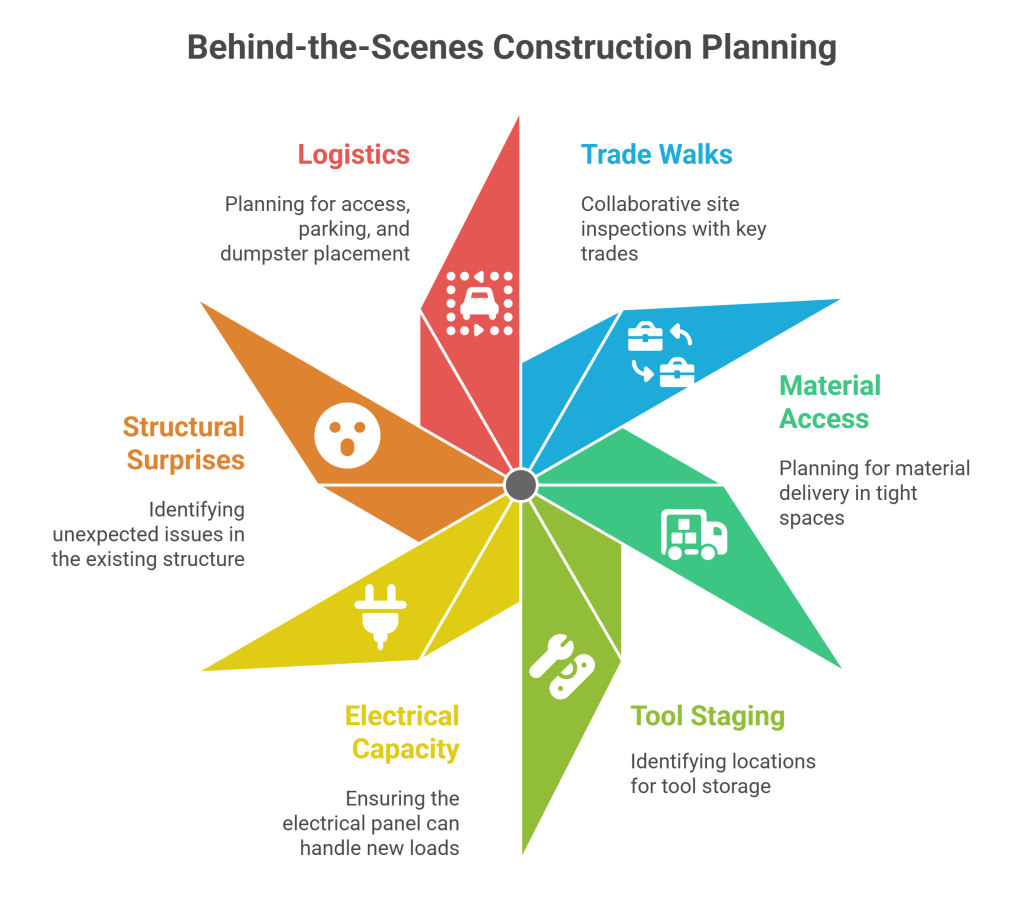
Catching conflicts here — not in Week 3 — is one of the reasons people choose design-build.
5. We Plan Site Protection and Household Logistics
A good remodel protects the home you’re not remodeling.
Before the demo, we decide:
- Where to put floor protection and pathways
- Where to build dust walls
- Which bathroom can the crew use
- How to handle kids and pets
- Whether we need to notify neighbors or the HOA about noise or parking
- Where the dumpster or materials will go
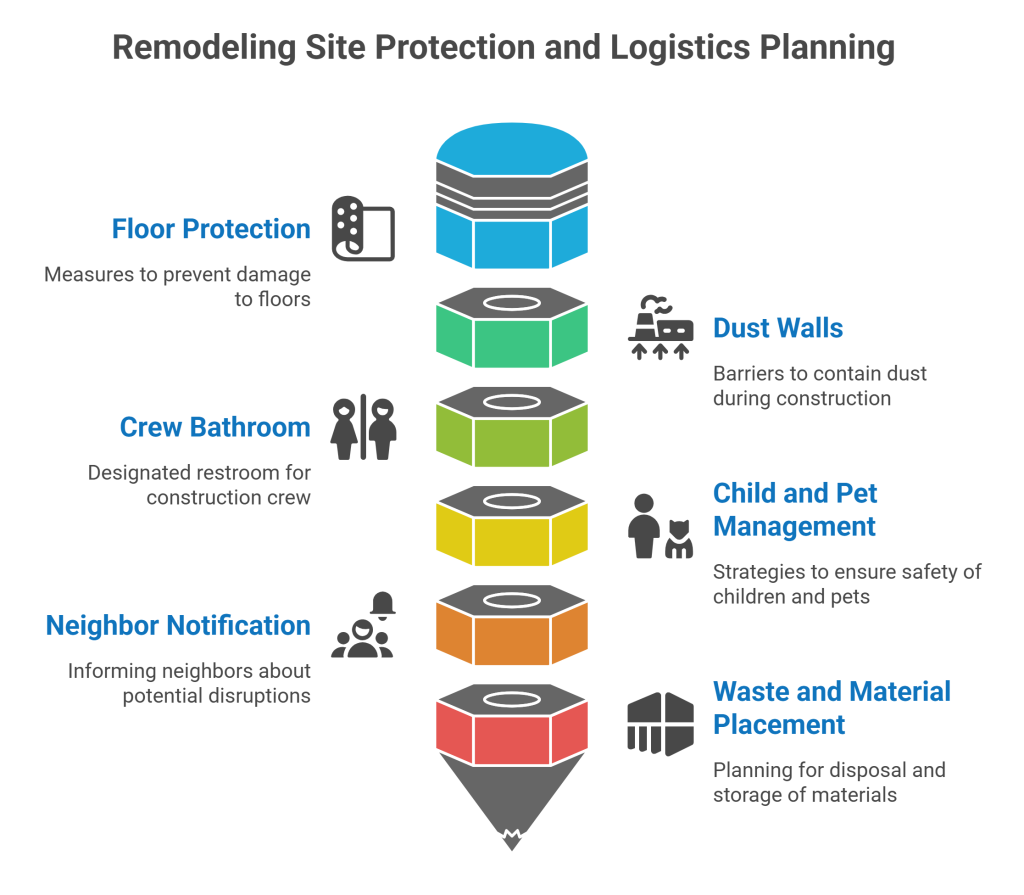
This is unglamorous, but it’s what keeps your home clean(er) and your neighbors happy.
6. We Release the Schedule Once the Pieces Line Up
Only after we have:
- Your selections,
- Your materials ordered (with ETAs),
- Your permits/approvals are in motion,
- Your trades confirmed…
…that’s when we release your start date.
That’s because your schedule is tied to real-world things — like when cabinets arrive — not just to an empty slot on our calendar. This is how we avoid the start/stop/start pattern that frustrates homeowners.
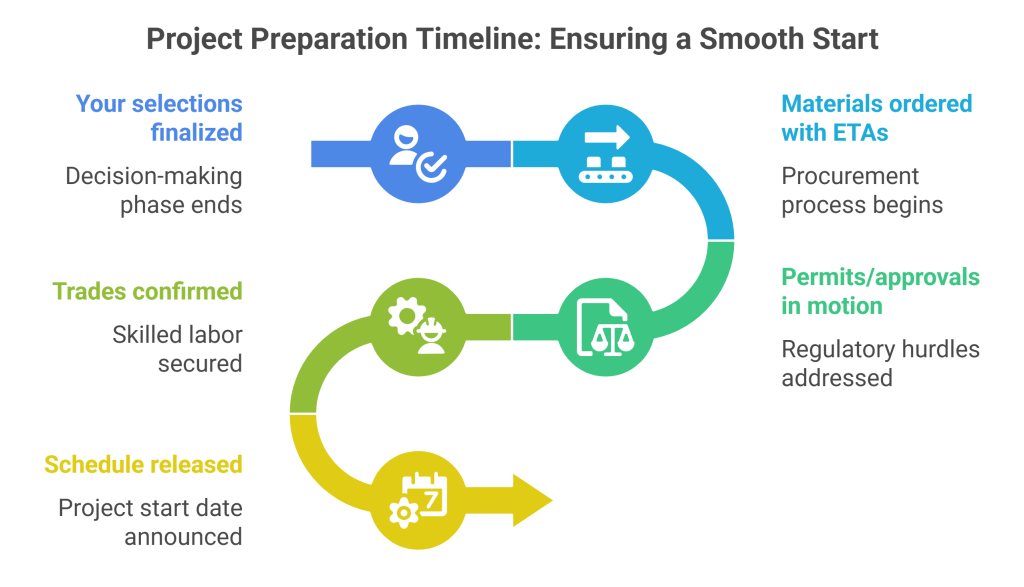
Our philosophy: it’s better to start slightly later and keep moving than to start immediately and leave you without a kitchen for an extra month.
7. What You Can Do While We’re Prepping
Homeowners always ask, “Is there anything I should do while I wait?” Yes, and doing these things makes day 1 go more smoothly.
- Clear out cabinets, closets, or rooms we’ll be working in
- Plan a temporary kitchen or bath setup (and if you need help, Kaminskiy can set up a simple temp kitchen for you).
- Tell your HOA or neighbors we’re coming
- Let us know about any travel dates
- Decide on any small add-ons (extra lights, built-ins) before we open walls
- Make sure we have access (gate codes, garage, side yard)
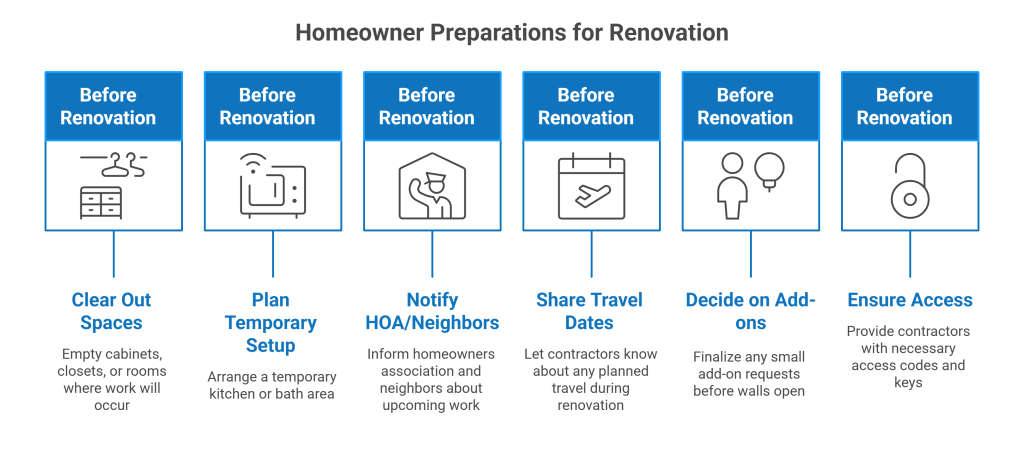
Think of this phase like pre-boarding a flight — the more ready you are, the faster we can take off.
8. When to Reach Out
Even though this is a quieter phase, we do want to hear from you if:
- Your HOA gave you new conditions
- You changed your mind on a selection
- Your appliance delivery date changed
- You’ll be out of town during the planned start week
- You noticed something on the plans that you don’t understand
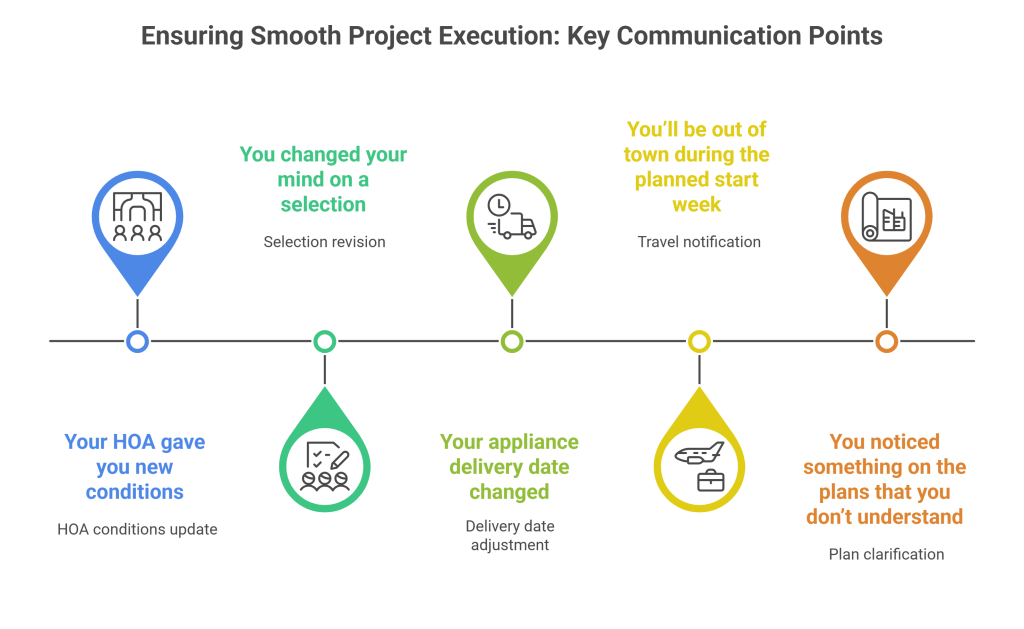
Good communication here prevents rescheduling later.
Frequently Asked Questions
Why does it feel like nothing is happening after I sign?
Because most of the work in this phase is office work—permits, ordering, scheduling, and trade walks—you don’t see people at your house yet. We’re lining everything up so construction doesn’t start and then stall.
Can’t we just start demo now and figure it out as we go?
We could, but it usually makes the project longer and more expensive. Waiting for permits and long-lead materials first means we demo closer to the date we can actually build.
How long does this pre-construction phase take?
It depends on permits, HOA response time, and material lead times. Custom cabinets or coastal/HOA approvals can add time. That’s why we don’t release a start date until the key pieces are in motion.
What can I do to help things move faster?
Make your selections quickly, send us HOA info right away, be available for questions, and clear the work areas before day 1. Slow selections are one of the biggest start-date killers.
What happens if my HOA or the city asks for changes?
We revise and resubmit—and if the change affects scope or cost, we’ll let you know. This is normal in San Diego, and it’s one of the reasons we start this work before the demo.
When should I contact you during this quiet phase?
Any time something changes on your end — appliances delayed, you’re traveling, HOA sent new conditions, or you want to swap a finish. Telling us early helps us keep your spot on the schedule.
What This Means for Your Remodel
Between “yes, let’s do it” and “first hammer swing,” a lot of moving parts have to be coordinated — especially in San Diego, where permits, HOAs, and long-lead materials can affect start dates. If things feel quiet, it’s usually because we’re lining everything up so construction is faster, cleaner, and more predictable once we’re in your home.
Schedule your complimentary in-home design consultation at 858-271-1005 to see what this process would look like for your project — or ask our team where your current project is in this pre-construction phase.

Kimberly Villa is the Operations Manager at Kaminskiy Design and Remodeling, where she has spent more than a decade involved in projects from pre-design through post-construction. Her experience in the remodeling industry spans nearly two decades across both East Coast and Southern California markets, giving her a firsthand view of how San Diego remodels unfold, from the first budget conversation to the final walkthrough. That day-to-day experience shapes the articles she writes for the Kaminskiy blog, where she helps homeowners make informed decisions before, during, and after a remodel. Before publication, each article is reviewed for accuracy by a Kaminskiy team member with relevant project expertise, such as a licensed architect, certified designer, or project manager.