
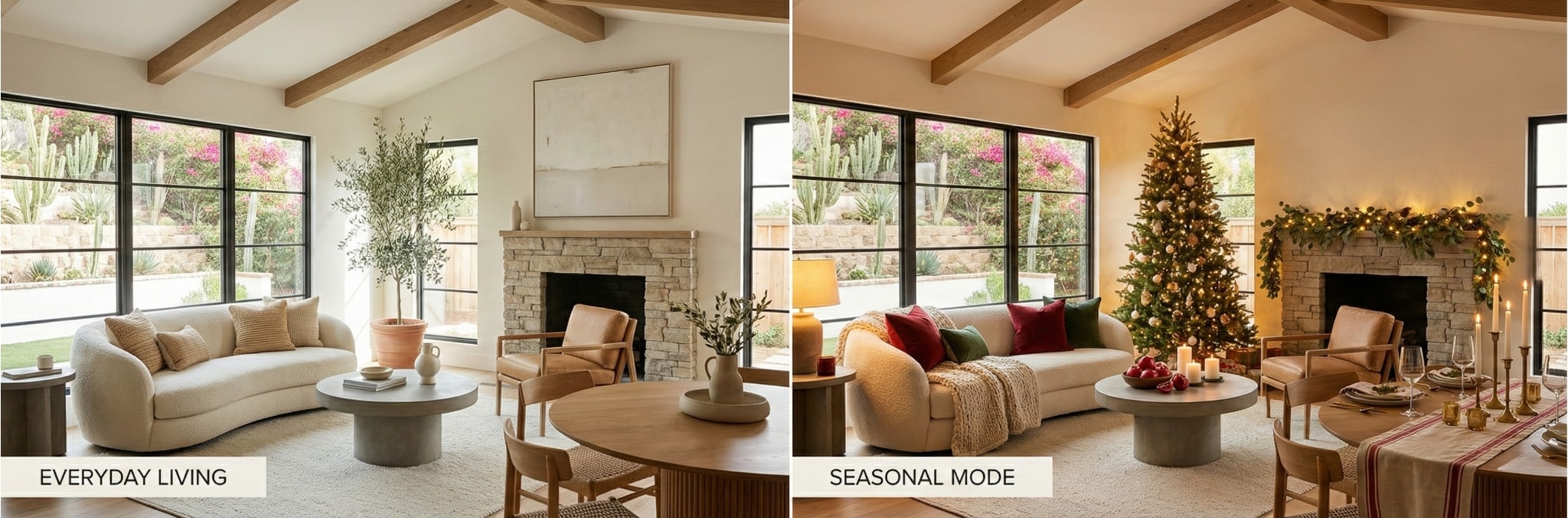
Seasonal and Holiday Remodeling: How to Create Flexible Spaces That Adapt to Holidays and Seasonal Décor
When you live in San Diego, “seasons” look a little different. There may be no snow shovels in San Diego, but many homes still juggle beach gear, sports equipment, holiday guests, and a steady flow of family and friends. Many homeowners want their homes to feel festive for holidays and special occasions without needing to rearrange the entire house each time.
This guide shares practical ways to plan spaces that work year-round, with built-in flexibility for hosting and seasonal décor, including:
- Thanksgiving dinners and big family gatherings
- Christmas, Hanukkah, and other holiday décor
- Summer parties and backyard BBQs
- Seasonal sports, school events, and visiting guests
- Simple everyday life when the decorations go back in the box
You will learn how to use neutral, versatile foundations, make indoor-outdoor areas work well in San Diego’s climate, plan smart storage, and set up lighting and power so the home can shift from everyday use to holiday hosting more easily. You will also find tips that make decorating simpler and cleanup faster after gatherings.
🎧 Prefer to listen? Here is the podcast version of this article, so you can take in the same information while driving, walking the dog, or getting things done around the house.
Key Takeaways for Seasonal-Friendly Remodeling
If you want the main ideas at a glance, these are the core principles behind seasonal and holiday-ready spaces.
When remodeling, focus on:
- Designing a neutral base: Choose timeless finishes and colors so seasonal décor stands out without clashing.
- Creating flexible layouts: Plan furniture placement, traffic flow, and extra seating options that can expand for gatherings.
- Using indoor-outdoor living: Take advantage of San Diego’s mild climate with patios, sliders, and outdoor zones that support hosting.
- Building hidden but convenient storage: Add storage for décor, tableware, and bulky items so they are easy to access when needed and out of sight the rest of the year.
- Optimizing lighting and power: Plan outlets, dimmers, and layered lighting so the home can shift from everyday comfortable to festive with minimal effort.
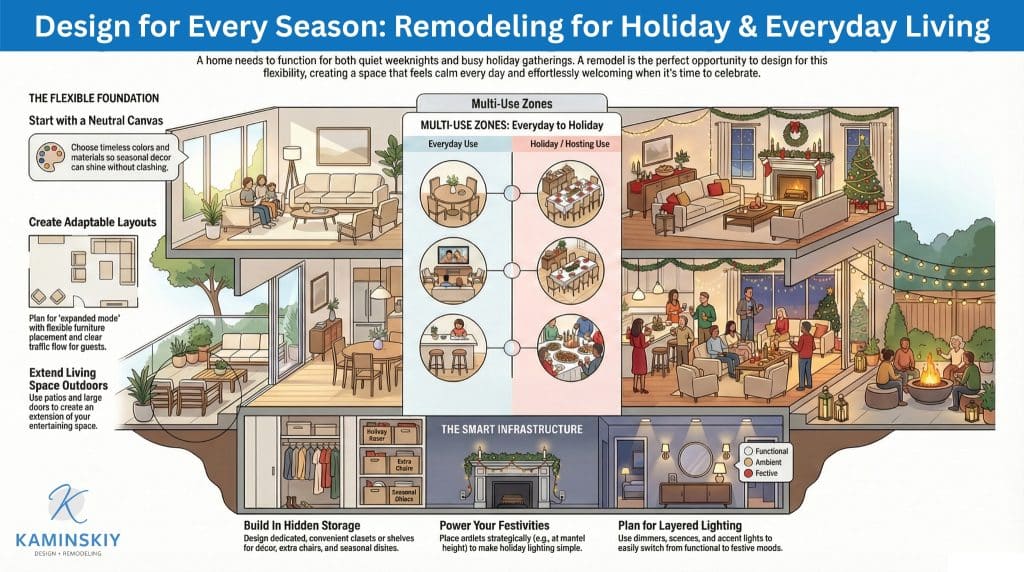
To make these ideas easier to picture, the infographic below shows how a San Diego home can shift from quiet weeknights to holiday hosting with the right foundation, layout, indoor-outdoor flow, storage, and lighting. As you look it over, think about where your own home feels tight during gatherings and which upgrades would add flexibility year-round.
Why Flexible, Seasonal-Friendly Design Matters in San Diego
San Diego homes often become the “hub” for extended family, visiting friends, and holiday get-togethers. That means your home has to do more than just look good—it needs to switch roles without feeling cramped or chaotic.
A remodel is a good time to think through how the home functions on different types of days, including:
- A regular Tuesday night with just your household, and
- A busy December weekend with kids, cousins, and neighbors coming and going
When planning a remodel, it helps to think in two modes: everyday living and hosting.
Things to consider during design:
- Guest flow:
- Can people move easily from the entry to the kitchen to the backyard?
- Are there “traffic jams” in hallways or narrow kitchen pinch points?
- Hosting zones:
- Where do people naturally gather now?
- Do we need more casual seating or a larger dining space?
- Storage and cleanup:
- Where will extra chairs, table leaves, and seasonal dishes live?
- Is there a logical place for décor storage close to where it’s used?
- Pay attention to where people naturally gather during get-togethers. If everyone clusters near the kitchen corner or bottlenecks at a hallway, use those patterns to guide layout, seating, and circulation decisions.
Start with a Neutral, Adaptable Base
Your everyday finishes should feel like a calm backdrop. Seasonal décor—whether that’s pumpkins, string lights, or greenery—should add personality without fighting your permanent materials.
Think of your remodel as setting the “canvas” that you’ll redecorate many times over the years.
Here are practical ways to create flexible spaces that work for everyday life and seasonal gatherings:
- Timeless color palettes
- Soft whites, warm greiges, and natural wood tones are easier to dress up for any holiday.
- Accent colors work best in items you can change (pillows, art, rugs), not on fixed surfaces like tile patterns, which may feel dated faster.
- Classic materials
- Wood, stone, and quality tile age better than trendy, ultra-specific finishes.
- You can still incorporate modern touches—just in ways that are easy to refresh later.
- Simple, clean lines
- Clean cabinetry, streamlined hardware, and minimal visual clutter let décor shine.
- Overly ornate details can compete with holiday decorations, making spaces feel busy.
- Flexible accent zones
- Built-in shelves, mantels, and console areas can be designed as “décor zones” where you’ll naturally rotate seasonal pieces.
- Plan for wall space where wreaths, art, or seasonal mirrors can be swapped without needing major changes.
- Choose one or two consistent spots for seasonal décor, such as a mantel, entry console, or open kitchen shelves. When these areas are intentionally balanced and easy to access, decorating feels faster and less overwhelming.
Design Living Spaces That Shift from Everyday to Entertaining
Your great room, dining area, and kitchen carry most of the load when you’re hosting for the holidays. The more flexible they are, the less you’ll feel like you’re rearranging your life every time you have company.
It helps to design with two modes in mind: “Everyday Use” and “Hosting.”
What to look at for flexible living spaces:
- Furniture layouts that can expand
- Room for a leaf in the dining table or a second table added end-to-end
- Space for extra chairs to be pulled in without blocking pathways
- Clear traffic flow
- Enough distance between the island and the perimeter so guests can move while someone cooks
- Paths from the kitchen to the dining and the kitchen to the outdoor spaces that don’t force people through tight bottlenecks
- Multi-use zones
- A breakfast nook that can become a kids’ table during holidays
- A home office corner that can serve as a gift-wrapping or buffet station when needed
Here’s a simple example of how to think about layouts:
- Estimate the largest gathering you host in a typical year and plan around that number. Layout, circulation, extra seating, and storage work best when they are designed to handle peak hosting without feeling cramped.
Make the Most of San Diego’s Indoor–Outdoor Living
One of the biggest advantages of living in San Diego is the ability to use your outdoor spaces year-round. With thoughtful planning, your backyard, patio, or California room becomes an extension of your entertaining space—especially around holidays and long weekends.
Plan indoor and outdoor areas as one connected hosting zone, especially during holidays and long weekends.
Ways to design seasonal-ready outdoor connections:
- Large openings to the backyard
- Multi-slide or bifold doors that open up the great room to the patio
- Wider steps and thresholds that are easy for guests of all ages to navigate
- Covered outdoor rooms
- California rooms or covered patios that can host a second dining table or lounge area
- Ceiling fans and heaters for comfort in different seasons
- Outdoor kitchens and beverage stations
- Built-in grills, side burners, and counter space for serving
- Under-counter fridges or beverage centers so guests aren’t crowding the indoor fridge
- Lighting for ambiance and safety
- String lights, sconces, and recessed lighting to make evening gatherings feel cozy
- Path lights and step lights to keep walkways safe for guests
- Outdoor décor is much simpler when outlets and mounting points are planned in advance. Consider adding exterior outlets and discreet hooks so seasonal lighting and decorations are easier to install and look more intentional.
Storage, Lighting, and Power That Make Seasonal Setup Easier
The part of seasonal decorating that really frustrates homeowners usually isn’t the décor itself—it’s where to store everything and how long it takes to plug everything in and set it up. Use those answers to guide the layout, storage planning, and lighting decisions.
Smart Storage for Seasonal Items
A remodel is a great time to carve out dedicated storage for:
- Holiday décor bins and boxes
- Built-in shelving in a garage, attic access, or a well-planned closet
- Strong, wide shelves sized to fit storage bins you already use
- Guest linens and dishware
- Linen closets near guest rooms
- Dining built-ins or sideboards for special-occasion dishware and serving pieces
- Foldable furniture
- Slim closets or under-stair storage for folding chairs, tables, and bar carts
- Bench seating with hidden storage in dining nooks or entries
Lighting and Power That Make Decorating Easier
Look carefully at outlets and lighting layers so you’re not stuck with extension cords and dark corners.
- Strategic outlets
- At mantel height for garlands and lights
- In window areas where you like to place candles or décor
- Outdoors under eaves, near trees, and along railings
- Layered lighting
- Overhead recessed lighting on dimmers for flexibility
- Wall sconces, pendants, and lamps that create warm, inviting moods
- Accent lighting inside glass cabinets or shelves for holiday displays
- Identify where the main holiday display usually goes, such as a tree or centerpiece setup. Planning outlets and sightlines around that spot can make decorating easier and help the space feel more intentional during the season.
Plan Ahead During Your Remodel (Instead of Retro-Fitting Later)
Common frustrations include: “I wish we had more outlets here,” “We never have enough space for guests,” “I don’t know where to put all this décor.” These usually show up in homes that were not designed with seasonal use in mind.
When you remodel, you have the chance to get ahead of all of that.
How to plan for seasonal flexibility during a remodel:
- Walkthroughs with “event mode” in mind
- Picture how guests typically enter, where coats and bags land, where drinks get served, and where people tend to sit.
- Use that flow to plan practical details like drop zones, bench seating, and well-placed outlets.
- Planning for changing needs over time
- Consider how the household may change, such as kids growing up, parents aging, or hosting more often.
- Favor flexible rooms that can shift over time, like from a playroom to a guest room, or to a hobby space.
- Scheduling the project around the calendar
- Many San Diego homeowners want major work completed before key dates, like hosting Thanksgiving or a big graduation party.
- Build a realistic timeline that accounts for design decisions, permitting, material lead times, and construction.
- Before planning changes, list the top seasonal frustrations to solve, such as space for a longer dining table, a better spot for a tree, or a clearer traffic path. Concrete examples make it easier to plan layouts, outlets, storage, and lighting that support real routines.
How San Diego Homeowners Can Design for Every Season
Seasonal-friendly planning works best when you think beyond day-to-day use. Consider how you host, where guests naturally gather, which areas feel tight during events, and what needs dedicated storage. Clear planning helps align layouts, finishes, and utility needs with real routines.
A seasonal-ready home usually includes:
- A flexible gathering space with comfortable circulation
- Storage for décor, serving items, and occasional-use pieces
- Lighting that can shift from everyday to festive
- Outlet placement that supports seasonal lighting and displays
- Indoor-outdoor flow that supports larger groups when needed
The goal is a home that feels calm and functional on an ordinary weekday, and more comfortable and efficient when hosting.
Bringing It All Together
Seasonal-friendly design starts with a calm, neutral foundation so holiday décor can change without clashing with permanent finishes. Flexible layouts make it easier to shift from everyday living to hosting by planning traffic flow, extra seating options, and serving space. San Diego’s indoor-outdoor lifestyle can also help during gatherings when patios, sliders, and outdoor zones function like an extra room.
Finally, the details that seem small often matter most during busy seasons. Storage that is easy to access, outlets placed where décor actually goes, and layered lighting on dimmers can make setup simpler and cleanup faster. When these elements are planned during a remodel, the home tends to feel comfortable year-round and easier to adapt as the calendar fills up.
Your Seasonal Remodeling Questions, Answered
How early should I start a remodel if I want my home ready for the holidays?
It depends on the size and complexity of the project, but a useful rule of thumb is to start at least 6 to 9 months before the date the home needs to be ready. That usually allows time for design development, selections, permitting, ordering materials, and construction without rushing. For larger projects or whole-home remodels, 9 to 12 months is often a safer timeline.
Do I need to design my home specifically around one holiday?
No. A better approach is to create a neutral, timeless base that works for every season. Instead of planning around one holiday, focus on hosting patterns in general, such as how many people you typically have over, where gatherings naturally happen, and how much space is needed for food, seating, and circulation. The goal is a home that can adapt to different celebrations without relying on holiday-specific design choices.
What are the most important areas to remodel if I host a lot?
The highest-impact areas are usually the kitchen, the main living area (often a great room), and the outdoor living space. These zones carry most of the load when cooking, serving, and entertaining. Dining rooms, guest suites, and powder rooms can also make a meaningful difference, especially for overnight guests. If prioritizing work, focus on the spaces that affect comfort, flow, and function during gatherings.
Can I plan storage just for seasonal décor and extra seating?
Yes. It is often one of the most practical improvements for households that host frequently. Dedicated storage for décor bins, folding chairs, table leaves, and special dishware can prevent everyday closets and garages from becoming cluttered. Options can include a better-organized hall closet, a built-in sideboard, storage benches, or a more efficient garage layout.
How can a home support both everyday comfort and big gatherings?
It helps to plan for two modes: everyday use and hosting. In everyday use, the layout should feel calm, functional, and easy to move through. In hosting mode, the space should allow temporary additions like extra chairs or an expanded table, and it should support easy circulation between the kitchen, dining, living areas, and outdoor zones. Planning around guest count, serving style, and where people naturally gather can guide layout and furniture decisions.
What if my home is small? Can it still work for hosting?
Yes. Smaller homes often work well for hosting when they rely on multi-use zones and flexible furniture. A breakfast nook can double as a kids’ table, a console can serve as a buffet, and an outdoor space can function as an extra gathering area during events. With a thoughtful layout and practical storage, even a modest footprint can feel comfortable when guests are over.
Season-ready spaces tend to work best when layouts, storage, lighting, and indoor-outdoor flow are planned around real routines and the way you actually host.

Kimberly Villa is the Operations Manager at Kaminskiy Design and Remodeling, where she has spent more than a decade involved in projects from pre-design through post-construction. Her experience in the remodeling industry spans nearly two decades across both East Coast and Southern California markets, giving her a firsthand view of how San Diego remodels unfold, from the first budget conversation to the final walkthrough. That day-to-day experience shapes the articles she writes for the Kaminskiy blog, where she helps homeowners make informed decisions before, during, and after a remodel. Before publication, each article is reviewed for accuracy by a Kaminskiy team member with relevant project expertise, such as a licensed architect, certified designer, or project manager.