


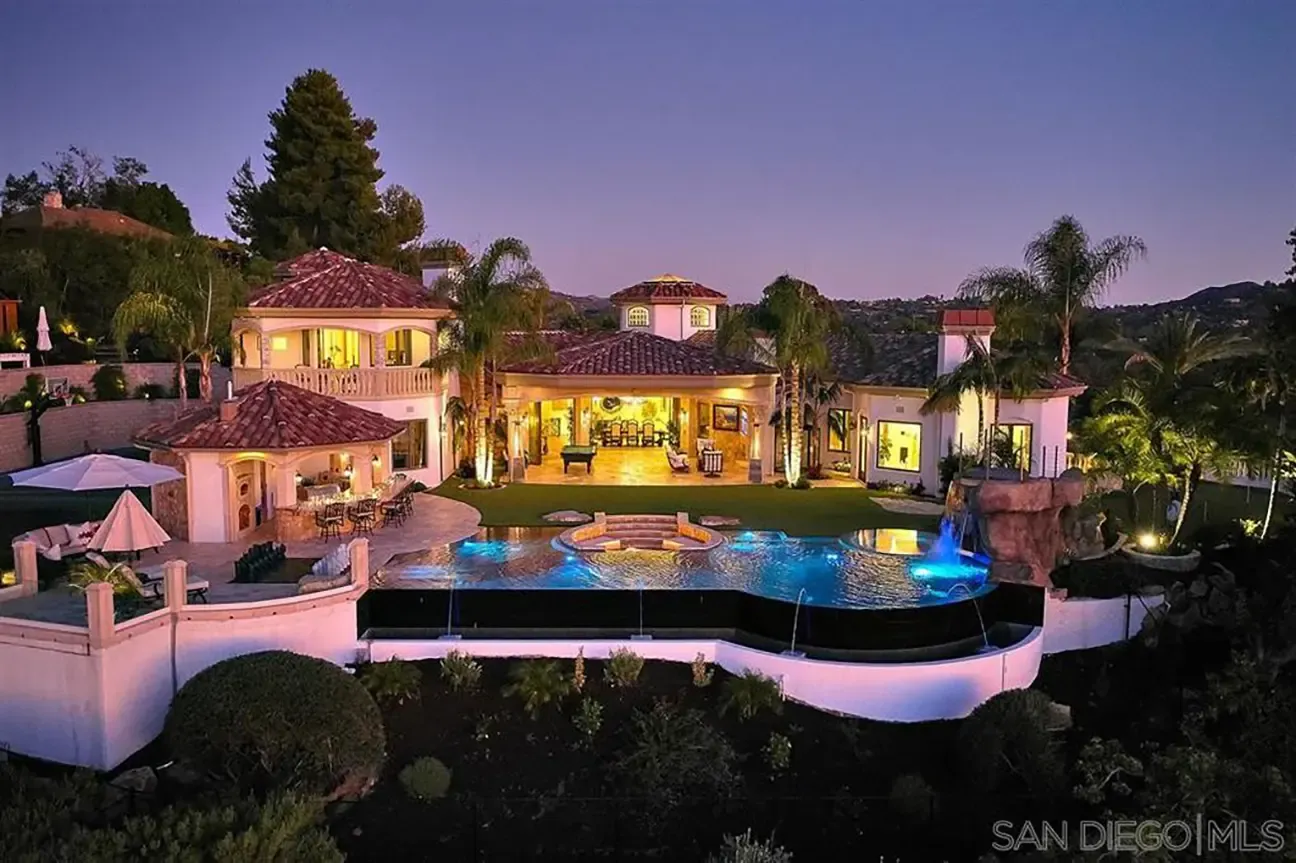


"What would it cost to do the backyard?" is the question behind most first calls about outdoor living, and the honest answer is that it depends on which pieces you want and how many of them share one plan. A fire pit is a weekend's budget; a pool with its decking is a car's. This article puts the San Diego answer in one place: what each piece costs in 2026, what Kaminskiy has priced for outdoor living, where the dollars go in a $165,000 backyard, what the national numbers say about value, what the City requires and how long it runs, and how the number has moved since 2021.
Every figure is either from our own records, published as shares and medians rather than counts, from the working ranges our designers use, or from a named public source. Where our numbers differ from a published figure, we say why.
Five pieces of a backyard, and what each runs in 2026
In San Diego County an outdoor living project designed, permitted and built by one team runs from about $8,000 for a fire feature to $250,000 and more for a pool and spa, and a backyard that combines several pieces on one plan usually lands between $100,000 and $300,000. Where a project falls inside those ranges is decided by two things more than any other: how much structure it needs, and how much has to run underground to serve it.
The California room and the covered patio
A covered patio is a roof over a slab. A California room is a room with its walls open to the yard: a roof framed into the house's roofline, a finished ceiling with a fan and lighting, usually a fireplace or a television wall, and furniture that stays out all year. The jump from one to the other is structural. The footings, the posts and the tie-in to the existing roof are engineered and inspected, and matching the roofing and the stucco so that the room looks original is finish work the house never had. At $40,000 to $120,000 it is the piece most San Diego families start with, because it is the one they use every evening.

Decks
A deck is the piece that national figures describe best, because it is the one that varies least in scope. The 2025 Cost vs. Value report prices a 16 by 20 foot pressure-treated wood deck with railing and three steps at $18,405 in the Pacific region and the same deck in composite at $26,891, as a professional job on flat ground. Few San Diego decks are that deck. A canyon lot, a second level, a spa set into the framing, built-in seating, lighting in the risers and a stair to a lower patio are what take a San Diego deck from $25,000 to $90,000, and a home that sits high off the ground or a flat roof that becomes a sky deck carries the structure to match. The Point Loma decks are the pattern: three levels stepping down a slope, each one a room.

The outdoor kitchen
People price the grill first. Half the cost of an outdoor kitchen is what serves it: the gas line trenched and permitted, the water and the drain, the circuits for the refrigerator and the lighting, the footing under the masonry, and the cover above it for the fan and the television. A grill island with a counter is the $30,000 end. A U-shaped bar with a built-in grill, a full-size refrigerator, a sink, a cooktop or a pizza oven, and a roof is the $100,000 end, and it is the version that replaces the indoor kitchen for the months it is in use. Near the coast the materials decide how long it lasts: stainless hardware and marine-grade finishes, which our outdoor kitchen ideas article goes into.

Pools, spas and what goes around them
A pool is priced as a project, and it is the piece where the number around the water is as large as the water. The shell, the equipment and the plaster are the pool; the decking, the coping, the spa, the drainage, the fencing and alarms the law requires, and the landscape that ties it to the house are the rest, and they are where our scope usually lives. At $120,000 to $250,000 and more for a pool and spa with its decking, a pool is the single largest piece in the backyard, and a pool house or a cabana with a restroom is its own project on top.
Fire features
A gas fire pit ringed in stone or a stacked-stone outdoor fireplace is the finishing touch and the least expensive piece, $8,000 to $30,000. The gas line is the part that is permitted, and the fire department's clearance rules decide where it can sit. Our Encinitas fireplace is the version at the top of the range: a full masonry chimney that anchors the patio.

Figures as of November 5, 2026. We refresh this page every quarter with the City's fee changes and our current pricing; the date at the top tells you when.
What our own proposals showed
We went back through the customer records Kaminskiy kept from 2021 to 2024 and pulled every inquiry tagged as outdoor living. The ones a designer drew and priced in writing are the baseline behind this article. For outdoor living on its own, the median proposal was $165,000, the middle half fell between $102,000 and $291,000, a quarter landed under $100,000, half between $100,000 and $300,000, and a quarter at $300,000 or more. The spread is the pieces: a deck or a California room on its own at the bottom, a pool with a kitchen and a room around it at the top.
Half of the outdoor living proposals we priced were combined with something inside the house, most often the whole home or a kitchen and a bath, and those budgets had a median of $522,000. That is the pattern the whole home cost article describes from the other side: when the kitchen opens to the yard, the yard gets designed with it.
Download the one-page cost summary (PDF)
Where $165,000 goes in a backyard
Here is how a backyard at our median, a California room with a fireplace, an outdoor kitchen, new hardscape, a fire pit and the landscape to tie them together, typically divides at about $165,000 when one team carries the whole project. The shares are our working rule of thumb; a pool replaces the room as the largest block, and a sloped lot adds retaining walls to the hardscape.
Want a number for your own backyard?
A complimentary in-home design consultation is how an outdoor living budget starts: a designer walks the yard, finds the slope, the utilities and the setbacks, hears what the space is for, and comes back with a range by piece and a plan you can keep. The outdoor living page shows how one team designs, permits and builds the yard on one contract.
What the national numbers say about value
Three published figures set the national frame. The 2025 Cost vs. Value report from Zonda prices three outdoor projects in the Pacific region, with the share of cost a realtor expects back at resale. The National Association of Home Builders asks buyers what they want. The American Institute of Architects asks residential architects what their clients are asking for.
Two things in that chart are worth a second look. The wood deck is the only remodeling project in the Pacific region that returns more than it costs, and composite recoups less than wood here, the reverse of the national pattern, because the appraised value does not rise with the material while the cost does. The backyard package recoups less than half, which is the honest way to read outdoor living: a deck is an investment, a California room with a kitchen and a fire pit is for the years you live there. What buyers want points the same way. In the NAHB's What Home Buyers Really Want survey, 86% rate a patio essential or desirable, 82% exterior lighting, 81% a front porch and 80% landscaping, four of the most-wanted features in the house. And on the design side, the AIA's Home Design Trends Survey for the second quarter of 2026 reports outdoor living rooms as the special-function room gaining popularity fastest, a net 51% of residential architects reporting more demand, up from 40% a year earlier and ahead of every other room in the house.
Permits, the code and the clock
Outdoor living is the one area of remodeling where a small project can skip the building permit, so the first question is which side of the line yours is on. The City of San Diego's permit exemption list and its bulletins on patio covers and residential decks draw it:
- Decks. No building permit if the deck is under 200 square feet, no more than 30 inches above grade at any point, not attached to the house and not serving the main exit. Above 30 inches a 42-inch guard is required, and the ledger that carries an attached deck cannot bear on stone or masonry veneer. Within 300 feet of the ocean the code calls for stainless fasteners and connectors; in a very high fire hazard zone the decking has to meet the state's wildland-urban interface standard.
- Patio covers. Exempt at 300 square feet or less and no taller than 12 feet, open on two or more sides, outside the Coastal Overlay Zone, a planned development and environmentally sensitive lands, and clear of the setbacks. A California room tied into the house goes through plan check.
- Pools and spas. Every in-ground pool requires a permit. Under California's Swimming Pool Safety Act a new or remodeled pool needs two of seven drowning-prevention features, an isolation fence, a mesh fence, a safety cover, door and window alarms, a self-latching door, an in-water alarm or an equivalent, and since January 1, 2026 the City no longer counts the wall of the house as one side of the barrier.
- Gas, electric and fire. Every gas line and new circuit is permitted on its own, so an outdoor kitchen, a fire feature and a lit patio almost always are. A built gas fire pit may need only the plumbing permit; a portable outdoor fireplace sits 15 feet from the house under the fire department's policy.
- Landscape and water. A new landscape of 500 square feet or more, or a rehabilitated one of 2,500 square feet or more with a permit, meets the state's water-efficient landscape ordinance. The County Water Authority's turf replacement rebate starts at $2.00 per square foot for 250 to 5,000 square feet of lawn taken out.
The fees, under the City's fee schedule of August 2026: a patio cover about $1,942 in plan check and inspection, a deck of 500 square feet or less about $1,942, a custom pool about $3,179, a gas line $264.25 for the first five outlets, and every one of them rose 7.25% on May 4, 2026. In the unincorporated county a patio or fence permit over the counter runs $926 and a pool or spa $1,221. The fees are small beside the project; the clock is the cost, and plan check is where the clock runs.
On the clock, plan on six to ten weeks of design, selections and engineering, then the permit, then the build: three to six weeks for a deck, four to eight weeks for an outdoor kitchen, six to ten weeks for a California room, three to five months for a pool and spa, and three to five months for a backyard that combines several of them, because the gas, the electric and the footings are inspected before anything is covered. Across the projects we signed, the median time from a family's first inquiry to a signed contract was 28 days. San Diego helps with the rest: 146 clear days a year, 85% of the rain between November and March, and a dry season from April into November that is when a backyard builds. Our timeline guide lays out each phase.
Three things about San Diego that move the number
| Condition | What it changes | What it adds |
|---|---|---|
| A sloped or canyon lot | Retaining walls, engineered footings, a deck instead of a patio, drainage designed to carry water away from the house | The largest single mover: a deck on a slope is two to three times a patio on grade |
| A very high fire hazard zone | Decking, railings and the underside of a California room meet the wildland-urban interface standard; brush management shapes the plan; the City of San Diego has 71,833 acres in the zone and about 80% of Poway is in it | Ignition-resistant or noncombustible decking and a stricter detail set, typically 10 to 20% on the deck |
| A coastal address | Stainless fasteners and connectors within 300 feet of the shoreline, marine-grade outdoor appliances, and a Coastal Development Permit review for work the exemption list does not cover | Materials that last in salt air, and a longer permit |
The Santa Ana winds that arrive between October and February, strongest in December, are the other San Diego fact in an outdoor plan: a California room is placed and its fireplace vented for the wind that comes from the east and the dry air that comes with it.
How the number has moved, 2021 to 2026
Readers ask why an article about 2026 prices looks back five years. Because the direction is the point: a backyard in San Diego has cost more in almost every year we have records for, and the lumber, the concrete and the metal that build one have all risen again this year. Here is the whole run, from the proposals our designers priced to the pricing we quote today.
| Year | What it cost | What moved |
|---|---|---|
| 2021 | Median proposal $170,000; middle half $71,000 to $313,000 | Lumber at its all-time peak, and the pandemic year when every family wanted the yard |
| 2022 | Too few priced on their own to publish a median; the ones we did sat near $145,000 | Lumber came off its peak; labor did not |
| 2023 | Median proposal $245,000; middle half $95,000 to $305,000 | Bigger scopes: pools, kitchens and rooms on one plan as families stayed put at 7% mortgage rates |
| 2024 | Costs tracked the indexes | Softwood lumber flat for the year; concrete products up |
| 2025 | Costs tracked the indexes | A 10% tariff on imported softwood lumber from October 14; composite decking prices nearly flat |
| 2026 | Our ranges: $25,000 to $90,000 for a deck, $40,000 to $120,000 for a California room, $100,000 to $300,000 for several pieces on one plan | Softwood lumber up 14.2% in a year to September; building materials up 5.5%, the fastest since 2022; concrete products up 4.2%; City permit fees up 7.25% in May; steel and aluminum duties applied to the full value of imported railings, hardware and appliances from April |
Our own medians cover too few backyards a year to call a trend on their own; read with the indexes, they say what the indexes say. The Bureau of Labor Statistics' softwood lumber index peaked in July 2026 at 17% above a year earlier and stood 14.2% higher in September; the National Association of Home Builders reports building material prices up 5.5% in the year to September 2026, the fastest since December 2022. The one material that has not moved is composite decking: Trex reported in August that its growth came from volume with pricing contributing minimally, and puts composite materials at $15 to $30 per square foot, about a third of an installed deck. A deck framed in lumber and a kitchen built in masonry, steel and stainless are the two outdoor projects most exposed to this year's increases. If you are going to build the backyard, the cheapest year to do it is this one.
Before you start
- Start with the lot, not the furniture. Slope, drainage, setbacks and where the gas meter and the panel are decide the price before any piece is drawn.
- Design the whole yard, build it in phases if you need to. One plan with the trenches, the footings and the drainage in the right places lets the pool come next year without digging up this year's patio.
- Decide gas and water early. A gas line and a sink are the difference between a grill on a counter and a kitchen; they are also the permits and the trench.
- Carry a contingency and name it. Ten percent of construction on a level lot, closer to fifteen on a slope, because the retaining wall is where the soil surprises you.
- Build in 2026 if you are going to build. Lumber, concrete, the metal duties and the permit fees have all stepped up this year, and none of them is scheduled to step back.
Our articles on outdoor kitchen ideas and turning a flat roof into a deck go deeper on the design side, and the outdoor living page shows what we build, from a fire pit to a pool with its cabana.
How we built these numbers
The baseline figures come from Kaminskiy's own customer records, 2021 to 2024, analyzed in November 2026: every inquiry tagged as outdoor living, the ones a designer priced in writing, outdoor-only when the scope was the yard and nothing inside the house, proposals under $15,000 excluded, the median and quartiles on the rest, the top and bottom 5% trimmed before the range, and the year taken from when the project was priced. We publish shares, medians and ranges, never counts, and no client's project is identifiable from anything here. The ranges by piece are the working ranges our designers use in 2026 for a project designed, permitted and built by one team in San Diego County, reviewed by the designer named at the top of this page. The one-page summary (PDF) carries the same tables, and all of it is refreshed each quarter.
Sources read for this article (November 2026)
- Zonda, Remodeling 2025 Cost vs. Value, Pacific region and national: deck addition in wood and composite, backyard patio (June 2025).
- City of San Diego Development Services: When is a Permit Required (February 2025); Information Bulletins 206 (patio covers, March 2026), 211 (residential decks, April 2026), 501 (construction permit fees, August 2026), 103 (electrical, plumbing and mechanical fees, May 2026), 712 (private pools and spas) and 201 (fireplaces); the May 2026 fee increase notice; the 2025 code adoption fact sheet on pool barriers (November 2025). San Diego Fire-Rescue, recreational fires policy. County of San Diego, PDS 613 fee schedule (July 2026).
- California Residential Code 2025, section R507 (exterior decks) and R337 with the California Wildland-Urban Interface Code; California Health and Safety Code section 115922 (Swimming Pool Safety Act); California Code of Regulations Title 23, section 490 and following (Model Water Efficient Landscape Ordinance).
- National Association of Home Builders: What Home Buyers Really Want, 2024 edition; Remodeling Market Index, third quarter 2026; building material price updates (August to October 2026); share of new homes with decks and patios (2025 and 2026).
- American Institute of Architects, Home Design Trends Survey, second quarter 2026 and second quarter 2025.
- U.S. Bureau of Labor Statistics, Producer Price Index for softwood lumber, concrete products and brick (via FRED, September 2026); Trex Company, second quarter 2026 results and materials cost guidance; Section 232 proclamations on softwood timber and lumber (October 2025) and on steel, aluminum and copper derivatives (April 2026).
- National Weather Service, Climate of San Diego (Technical Memorandum WR-256) and the Lindbergh Field climate summary; California Office of the State Fire Marshal, recommended fire hazard severity zones in local responsibility areas (March 2025); San Diego County Water Authority, turf replacement rebate (April 2026).
- Kaminskiy Design & Remodeling, customer relationship records 2021 to 2026, aggregated November 2026 (method above), and the designers' 2026 working ranges.
Outdoor living cost in San Diego: your questions
Designed, permitted and built by one team, a single piece runs from about $8,000 for a fire feature and $25,000 for a deck to $250,000 and more for a pool and spa with its decking. A California room or covered patio runs $40,000 to $120,000, an outdoor kitchen $30,000 to $100,000. When a family combines several of those on one plan, the project usually lands between $100,000 and $300,000. The median outdoor living proposal Kaminskiy priced between 2021 and 2023 was $165,000, with the middle half between $102,000 and $291,000.
A covered patio built as a room, with a roof tied into the house, a finished ceiling, a fan, lighting and usually a fireplace or a television wall, runs $40,000 to $120,000 in 2026. The low end is a freestanding or lightly attached cover over an existing slab; the high end is a true outdoor room with a kitchen counter, a fireplace and a roof that matches the house. The roof tie-in and the footings are the cost, not the furniture. A cover of 300 square feet or less that stays 12 feet or lower needs no City building permit outside the coastal zone; a room tied into the house goes through plan check.
In San Diego a built-in outdoor kitchen runs $30,000 to $100,000 in 2026. The counter, the grill and the refrigerator are what people price first, but half the cost is what serves them: the gas line, the water and drain, the circuits, the footing under the masonry and the cover above it. A grill island with a counter sits at the low end; a U-shaped bar with a refrigerator, a sink, a pizza oven and a roof with a fan, lighting and a television sits at the top. Our outdoor kitchen ideas article covers the layouts and materials that hold up near the coast.
A deck runs $25,000 to $90,000 in 2026. The 2025 Cost vs. Value report puts a 16 by 20 foot pressure-treated wood deck at $18,405 in the Pacific region and the same deck in composite at $26,891, as a professional job with railing and stairs on flat ground. San Diego decks are rarely that simple: a canyon lot, a second level, a spa, built-in seating and lighting are what move the number toward the top of the range. Composite costs more up front and recoups less at resale in the Pacific region, but it does not need the yearly sealing a wood deck does in our sun.
In the City of San Diego a deck needs no building permit if it is under 200 square feet, no more than 30 inches above grade at any point, not attached to the house and not serving the main exit. A patio cover of 300 square feet or less and no taller than 12 feet is exempt unless the lot is in the Coastal Overlay Zone, a planned development or environmentally sensitive land. Anything larger, taller or tied into the house goes through plan check. Every gas line and new circuit needs its own permit, so an outdoor kitchen or a fire feature almost always does, and every in-ground pool requires a permit. The fees are in the article, and all of them rose 7.25% on May 4, 2026.
Some of it does, and some of it is for living. The 2025 Cost vs. Value report for the Pacific region puts a wood deck at 102.5% of its cost recouped at resale and a composite deck at 74.1%, while a full backyard package with a flagstone patio, a pergola, a fire pit and an outdoor kitchen recoups 45.8%. On the buyer side, 86% of buyers in the National Association of Home Builders' survey call a patio essential or desirable and 82% say the same of exterior lighting. Our remodeling ROI article puts outdoor projects beside the kitchen, the bath and the addition.
Plan on six to ten weeks of design, selections and engineering, then the permit, then the build: three to six weeks for a deck, four to eight weeks for an outdoor kitchen, six to ten weeks for a California room, three to five months for a pool and spa, and three to five months for a full backyard that combines several of them. The long waits are the permit when the project goes through plan check, and the gas and electrical inspections that have to pass before anything is covered. In San Diego the dry season runs from April into November, and 85% of the year's rain falls between November and March, so a project that starts design in winter builds in the dry months.
Ready when you are


